In this article

What to know
- Maintained average loss during treatment is a meaningful result.
- STEP 5 studied a specific weekly injectable regimen without diabetes.
- Withdrawal and continuing treatment are different evidence questions.
A plateau can be a maintained treatment effect
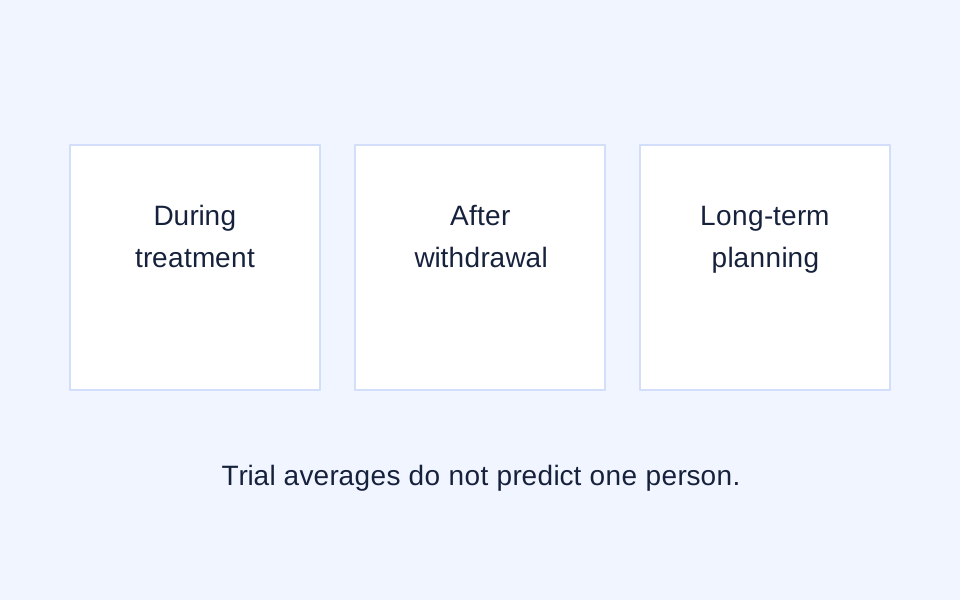
STEP 5 provides a useful answer to the concern that a flatter weight curve means treatment has stopped doing anything. Average weight loss with continued weekly semaglutide was largely maintained through two years. [1] That does not mean every participant kept losing weight, or that someone who has reached a plateau needs a higher dose. The interpretation depends on what happened alongside the flatter curve: continued treatment, continuing follow-up and the comparison group. Maintaining a reduction is different from demonstrating that the medicine is no longer needed. A flat average should therefore prompt a discussion of the current goal, rather than automatically be called failure.
The trial tested continued treatment in adults without diabetes
Investigators randomized 304 adults with obesity, or overweight with a related condition, without diabetes. Participants received weekly subcutaneous semaglutide targeted to 2.4 mg or placebo, alongside behavioral intervention, for 104 weeks. Each group contained 152 people; 92.8% attended the final safety visit. [1] Those features define the result. It was not a trial of an oral formulation, a compounded preparation or an unsupervised intermittent schedule. It also was not a study of what happens after everyone stops at a particular goal weight. The central question was whether treatment could produce and sustain a difference from placebo over the full study period.
Read the result in percentage points
Mean weight change at week 104 was −15.2% with semaglutide and −2.6% with placebo, an estimated difference of −12.6 percentage points. Gastrointestinal adverse events occurred in 82.2% versus 53.9%, mostly mild to moderate. [1] The difference concerns starting body weight, not a 12.6% improvement over the placebo group’s small reduction. The adverse-event figures also matter: a maintained average benefit is not the same as an effortless treatment experience. An individual decision has to account for symptoms, acceptability and the ability to continue care, rather than treat the mean change as the only outcome worth discussing.
The average does not forecast the next two years for one person
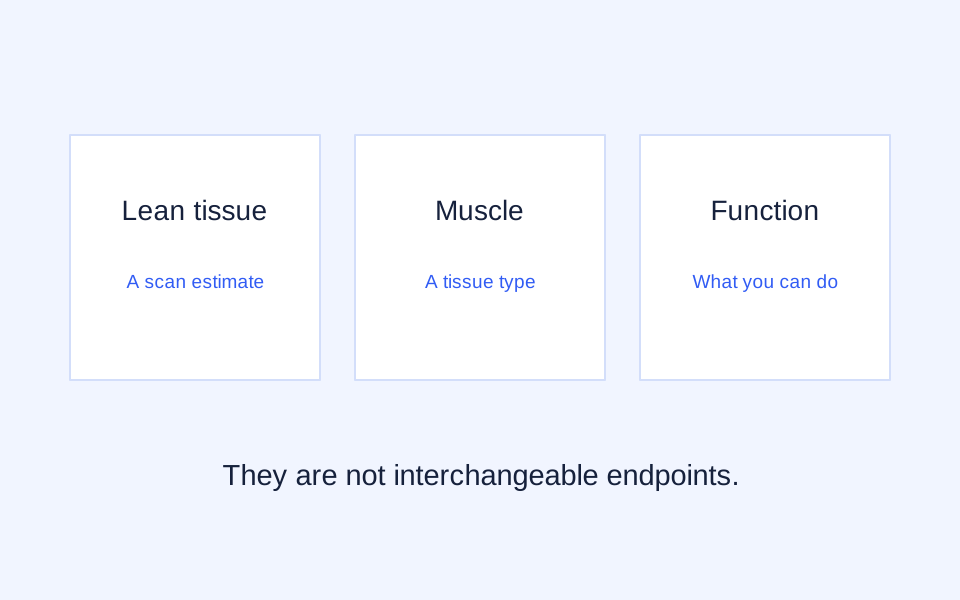
A group mean compresses different trajectories into one curve. Some people lose more, some less, and some change or discontinue treatment. STEP 5’s primary analysis included randomized participants regardless of discontinuation or rescue intervention. [1] That makes it different from a testimonial or an analysis restricted to the most successful continuing users. It still cannot predict a particular person’s next weigh-in. The practical value is a more realistic expectation of the treatment horizon: continuing benefit may look like maintaining a lower weight, rather than an uninterrupted downward line. Other goals, symptoms and day-to-day function can matter beside the percentage on a chart.
Stopping treatment asks a separate question
The STEP 1 extension followed 327 participants after the parent trial ended. Over the following year, the former semaglutide group regained an average 11.6 percentage points of starting weight, retaining a net 5.6% reduction from baseline. [2] That was a different study subset and phase, so it should not be pasted onto the STEP 5 curve as if the same people were followed through one uninterrupted experiment. It does show why maintenance during treatment and durability after withdrawal are different claims. Neither a plateau nor a good initial response establishes that stopping will preserve the same result. Any transition needs its own clinical discussion.
For a fuller explanation of the withdrawal evidence, read weight regain after stopping GLP-1 treatment.
Longer evidence comes from a different population
A prespecified SELECT analysis assessed weight over up to 208 weeks in 17,604 adults with established cardiovascular disease and overweight or obesity, without diabetes. Mean weight reduction at that point was 10.2% with semaglutide versus 1.5% with placebo in the in-trial analysis. [3] It adds longer follow-up, but its participants and purpose differ from STEP 5. The smaller average does not establish that the drug simply loses a fixed amount of effectiveness with time. When comparing studies, ask who enrolled, how treatment changes were handled and which analysis is shown before turning two percentages into a story about an inevitable personal trajectory.
Two years is useful evidence with real limits
STEP 5 was much smaller than a cardiovascular-outcomes trial and enrolled a population that was predominantly female and white. [1] Those limitations affect how broadly to extend its estimate and how much it can establish about uncommon harms. It also cannot answer every current formulation or dose question. A buyer should be cautious when a provider presents the result without naming the preparation studied. Evidence that an approved weekly injection maintained average weight loss is not evidence that every product described as semaglutide has the same effect. Keep the treatment, route, population and duration together when evaluating a commercial claim.
Use the result to define a continuing-care plan
The useful question after reading STEP 5 is what successful ongoing care would look like for you. That includes what is being maintained, how tolerability is assessed and how affordability affects continuity. If you are comparing prescribing services, examine their follow-up arrangement rather than assume the trial result ranks clinics. A service cannot make a study average into a personal guarantee. It can make the practical relationship clearer, with a route for questions and reassessment. The evidence supports taking maintenance seriously as an outcome; it does not require chasing a lower scale reading indefinitely or making a medication change without a prescriber’s assessment. A useful follow-up distinguishes an expected maintained response from a new problem, and gives you a clear way to revisit the plan when symptoms, priorities or access change.
To evaluate a continuing access relationship, see our Ro Body review.
Sources
Research describes groups and specific study conditions. Your medical history, symptoms and treatment decisions require advice from your own qualified clinician.