In this article

What to know
- The observed composite-event proportions were 12.0% versus 13.4%.
- All-cause mortality was not significantly different.
- The evidence is specific to dulaglutide and the studied diabetes population.
A cardiovascular result is a specific kind of benefit
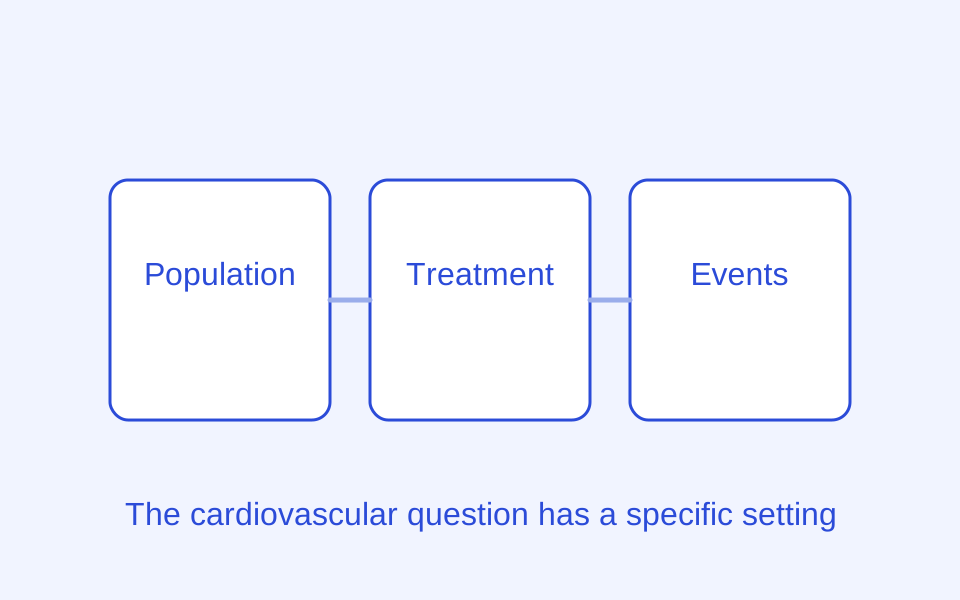
REWIND found fewer first major cardiovascular events with weekly dulaglutide than placebo in adults with type 2 diabetes and elevated cardiovascular risk. [1] That is different from demonstrating that a drug makes every person live longer, or that the GLP-1 option producing the most weight loss must also provide the best cardiovascular protection. The primary question concerned a defined composite endpoint over years. To understand the finding, keep the participants, their underlying risk and the actual events together. A relative-risk headline is useful only when the absolute experience of the two groups remains visible beside it.
The population was broader than previous-event patients alone
The trial randomized 9,901 people aged at least fifty with type 2 diabetes and either previous cardiovascular events or cardiovascular risk factors. Participants received weekly subcutaneous dulaglutide 1.5 mg or placebo in addition to existing care. Median follow-up was 5.4 years. [1] That long duration is one reason the study is useful for a cardiovascular question. It does not make the result applicable to a younger person without diabetes or comparable risk. Nor does it test every current dose or formulation. The question is whether the individual resembles the clinical situation the trial was designed to study.
Keep the absolute and relative numbers together
The primary composite occurred in 594 of 4,949 dulaglutide participants, or 12.0%, versus 663 of 4,952 placebo participants, or 13.4%. The hazard ratio was 0.88. [1] The raw difference in observed proportions is about 1.4 percentage points over the study’s follow-up, rather than a twelve-percentage-point reduction. A hazard ratio also incorporates time to the first event and is not simply the same statistic as subtracting two percentages. Both views are useful: the relative measure summarizes the trial comparison, while the absolute proportions help show its scale. Neither predicts an individual person’s exact chance of benefit.
For another medication-specific cardiovascular trial, read Liraglutide and heart risk: what LEADER established.
The composite is not every cardiovascular outcome
The endpoint combined nonfatal heart attack, nonfatal stroke and cardiovascular death, including unknown causes. All-cause mortality was 10.8% versus 12.0%, with a confidence interval crossing no difference and a P value of 0.067. [1] A favorable composite therefore should not be rewritten as a demonstrated reduction in every component or in death from any cause. Combining events helps a trial answer an important clinical question, but it can also make a broad headline sound more comprehensive than the evidence. Ask which outcome improved and which remained uncertain before translating the finding into a promise about longevity.
For a different population-specific cardiovascular trial, read SELECT cardiovascular evidence.
Gastrointestinal burden still matters over years
Gastrointestinal adverse events were reported by 47.4% of the dulaglutide group and 34.1% of placebo recipients. [1] Those events are part of the same benefit–burden assessment as the cardiovascular endpoint. The trial does not suggest that every patient should accept any symptom for a possible long-term reduction in risk. A clinician needs to consider the actual medicine list, health history and tolerability. A consumer comparison should therefore evaluate how continuing questions and reassessment are handled, rather than present cardiovascular evidence as a reason that follow-up can be minimal. A long treatment horizon needs a relationship that can adapt to the person using it.
The labeled claim remains tied to diabetes and risk
The current manufacturer information describes Trulicity’s cardiovascular indication for adults with type 2 diabetes who have established cardiovascular disease or multiple cardiovascular risk factors. [2] That is a product-specific statement, not a general label for any preparation called a GLP-1. The exact indication matters when a service advertises a medicine for a different primary goal. A clinician may consider several reasons for treatment, but the evidence should be named accurately. REWIND does not authorize extrapolating the same event reduction to a compounded preparation, a different active ingredient or a person without the study’s underlying clinical context.
SELECT answers a related question in another population
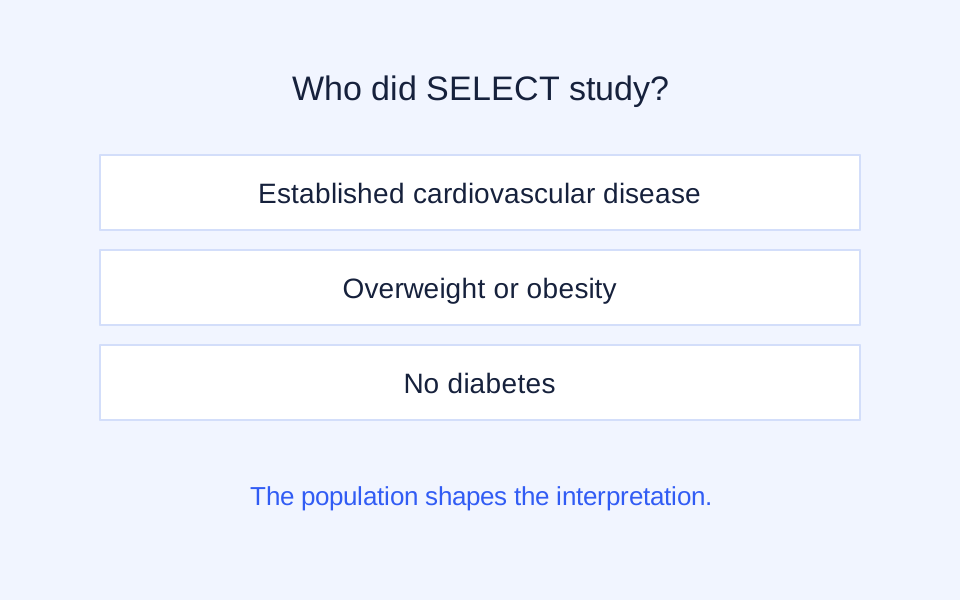
SELECT studied semaglutide in adults with established cardiovascular disease and overweight or obesity who did not have diabetes. Its weight analysis also describes the cardiovascular-outcomes context. [3] That extends the broader evidence base, but it is not a randomized comparison with dulaglutide. You cannot rank the medicines by placing their relative risk reductions beside each other while ignoring different entry criteria, treatments and follow-up. A more useful question is which trial addresses the actual patient and treatment goal. Direct comparisons and population-specific outcome studies each have a role; neither should be turned into a universal class ranking.
The practical decision needs a clear primary goal
Use REWIND to make a prescribing discussion more precise: is the proposed treatment addressing glucose control, cardiovascular risk, weight or a combination, and what evidence fits that purpose? Then consider affordability, tolerability and continuity beside the potential benefit. A provider’s logo does not change the trial result, and a membership cannot promise a personal reduction equal to a study average. If comparing services, judge how the care model supports the relevant long-term plan. The strongest conclusion is a bounded one: dulaglutide reduced the trial’s composite cardiovascular endpoint in a defined at-risk diabetes population, with other outcomes and burdens still requiring attention. A practical next step is to ask the prescriber which outcome matters most in your situation and what would make the plan worth continuing. That keeps a relative-risk headline connected to the actual decision, with room for symptoms, other medicines and changing priorities.
To examine a continuing clinical-care model, see our Form Health review.
Sources
Research describes groups and specific study conditions. Your medical history, symptoms and treatment decisions require advice from your own qualified clinician.