In this article
What to know
- STEP 2 enrolled adults with type 2 diabetes and BMI at least 27.
- The 2.4-mg weekly group lost more weight than placebo at 68 weeks.
- Weight, glucose and cardiovascular goals need distinct evidence.
Diabetes changes which comparison is useful
A weight-loss headline from adults without diabetes is not the cleanest starting expectation for someone living with type 2 diabetes. STEP 2 directly studied that population and found greater average weight reduction with weekly semaglutide 2.4 mg than placebo over 68 weeks. [1] That is the useful answer. It does not establish that an individual’s diabetes determines a fixed response, or that a smaller change than another study’s average is a personal failure. Compare evidence from the relevant population first, then discuss how the treatment fits glucose management, other medicines and the support already in place.
Three groups separated a dose question from a placebo question
The trial randomized 1,210 adults with type 2 diabetes, BMI of at least 27 and glycated hemoglobin between 7% and 10%. Groups received weekly subcutaneous semaglutide 2.4 mg, semaglutide 1.0 mg or placebo with lifestyle intervention. [1] The design was randomized and masked, with follow-up lasting 68 weeks. The extra semaglutide arm matters because a comparison against placebo and a comparison between two doses are different questions. It does not justify assuming that any product carrying the same molecule name is interchangeable, or that the trial establishes the best current dose for an individual reader.
The main result was a change in starting weight
Estimated mean weight change was −9.6% with 2.4 mg versus −3.4% with placebo, a difference of −6.2 percentage points. The proportion achieving at least 5% loss was 68.8% versus 28.5%. [1] These are group results, with different statistical forms: an average and a threshold probability. Neither tells a person exactly what they will lose. The threshold also is not a moral boundary between success and failure. A clinician may be evaluating glucose control, symptoms, other health goals and whether the treatment can be continued safely. Keep the weight result important without making it the sole measure of a useful care plan.
Tolerability was part of the same experiment
Gastrointestinal adverse events were reported in 63.5% of the 2.4-mg group, 57.5% of the 1.0-mg group and 34.3% of placebo recipients, mostly mild or moderate. [1] A treatment can have a favorable average effect and still be unacceptable for a particular person. The frequency should therefore accompany the benefit rather than appear as a distant footnote. It does not mean every digestive symptom will be minor, or that persistent difficulties should simply be endured to reach a trial dose. Discuss the actual symptoms and other medicines with the prescriber, with a clear plan for timely assessment when needed.
Do not make an indirect comparison look randomized
SUSTAIN 7 tested lower-dose weekly semaglutide against dulaglutide in 1,201 adults with type 2 diabetes, using a different active-comparator design over forty weeks. [2] It is relevant evidence about diabetes treatment, but it is not another arm of STEP 2. A provider cannot combine the most attractive results from separate trials into a new head-to-head claim about every current GLP-1 option. Before trusting a comparison graphic, identify the exact doses, duration and background treatment. When those differ, the comparison may help frame a question, but it should remain labeled as indirect rather than decide a prescribing choice on its own.
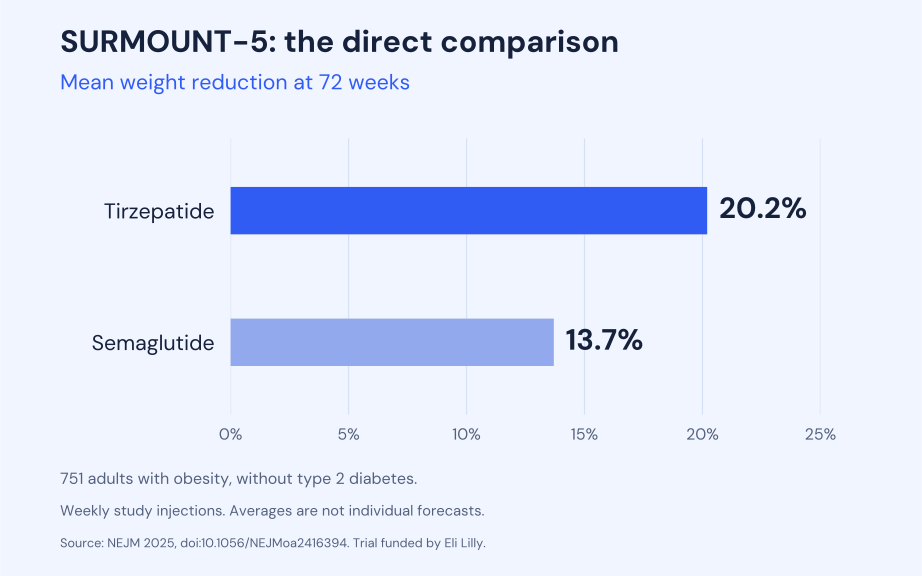
For a different population and comparator question, read the direct semaglutide–tirzepatide comparison.
Weight management and a cardiovascular indication are distinct
REWIND studied dulaglutide and major cardiovascular events in adults with type 2 diabetes at elevated cardiovascular risk. [3] That kind of outcome question differs from STEP 2’s weight question. A medicine can be discussed for glucose control, weight, cardiovascular protection or more than one goal, but the relevant evidence and approved indication need to be named. It is therefore unhelpful to rank every option solely by one weight-loss bar. A consultation should make the primary reason for treatment clear, with the other potential benefits and limitations considered in that context. One trial cannot carry every clinical claim made around a drug class.
The result does not rank prescribing platforms
STEP 2 tested a defined treatment regimen within a research setting, not the relative quality of online clinics or membership services. [1] A commercial service may help arrange an appropriate prescription, but it does not inherit an individual outcome guarantee from the study. For a buyer with type 2 diabetes, coordination with existing care is especially important to clarify: who reviews the complete medicine list, who follows relevant results and how a treatment change reaches the other clinicians involved? Those are questions about the service relationship. They should be evaluated alongside price rather than hidden behind a reproduced weight-loss statistic.
Turn the evidence into a more specific appointment
Bring the actual treatment proposal, existing diabetes medicines and your main goals to the clinical discussion. Ask which evidence fits your circumstances and what would count as a worthwhile response beyond an advertised average. If you are comparing services, consider whether their contact and follow-up arrangement can support that plan over time. Do not choose a formulation or dose from a trial summary alone. STEP 2 is useful because it narrows the question to a relevant population and regimen. Its practical value is a more precise conversation about treatment, with the 68-week result and tolerability considered together rather than a promise borrowed from a different group. It can help to name the decision that the next appointment needs to settle, rather than arrive with a demand to match a number from an advertisement. That keeps the conversation focused on your actual circumstances.
For an example of a continuing care-team model, see our Form Health review.
Sources
Research describes groups and specific study conditions. Your medical history, symptoms and treatment decisions require advice from your own qualified clinician.