In this article
What to know
- FLOW enrolled people with both type 2 diabetes and chronic kidney disease.
- The 24% figure is a relative hazard reduction for a composite outcome.
- Kidney monitoring and symptom follow-up remain necessary.
Kidney protection is a specific treatment question
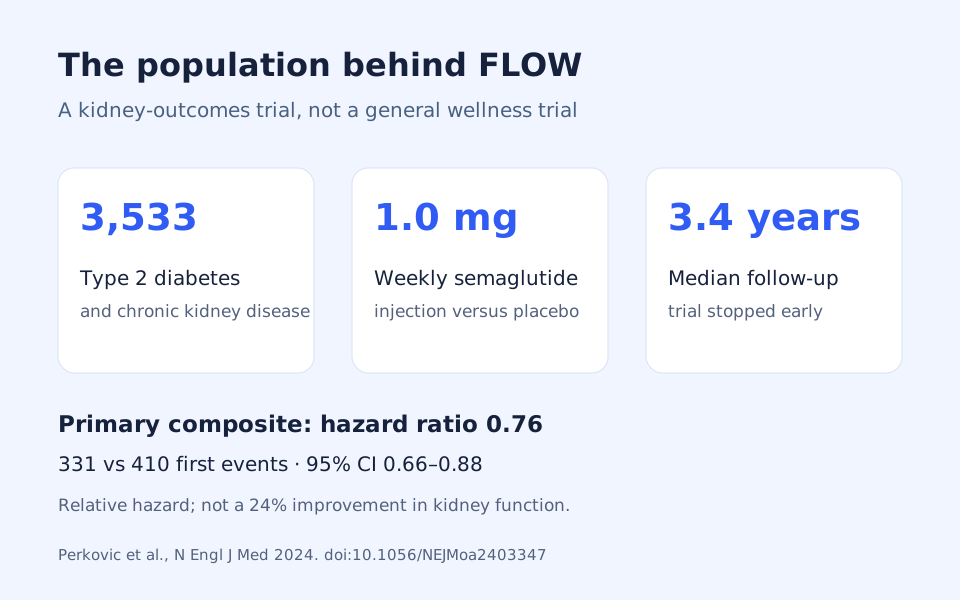
FLOW found a lower risk of a composite kidney and cardiovascular-death outcome with semaglutide in people who had both type 2 diabetes and chronic kidney disease. It did not test whether any person seeking weight loss should take semaglutide to prevent future kidney problems. The population is central to the result. [1]
That distinction is especially useful when a broad wellness advertisement describes an ingredient as protective. A kidney-outcomes trial can support a clinical discussion for an eligible patient without proving the advertised service delivers the same benefit. Start with the diagnosis, formulation and treatment goal, then examine the service offering.
The trial compared treatment on top of existing care
Researchers randomized 3,533 participants to semaglutide 1.0 mg injected weekly or placebo. Participants had type 2 diabetes and chronic kidney disease defined using kidney filtration and urine albumin criteria. Median follow-up was 3.4 years; the trial stopped early following a prespecified interim analysis. Novo Nordisk funded it. [1]
This was a clinical-outcomes study, not a trial of a telehealth subscription, an oral preparation or a compounded vial. Naming the tested regimen prevents a familiar molecule from becoming a shortcut around product differences. Likewise, the placebo comparison does not establish that semaglutide should replace another kidney treatment already prescribed to you.
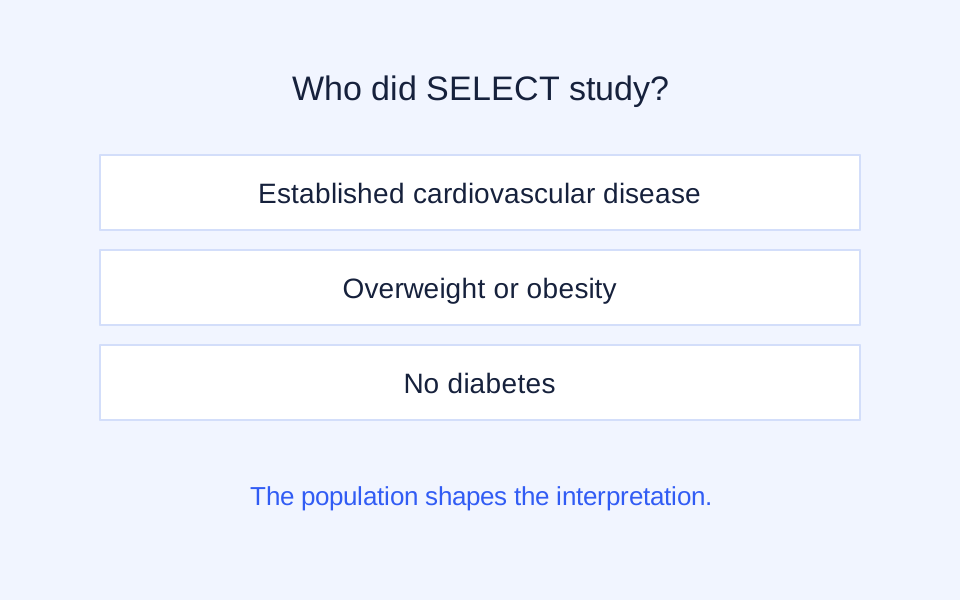
For another part of this decision, see GLP-1 cardiovascular benefits: who SELECT actually studied.
Read the 24% reduction with its denominator
The primary outcome combined kidney failure, a sustained major decline in estimated filtration, or death from kidney-related or cardiovascular causes. There were 331 first events in the semaglutide group and 410 in the placebo group. The hazard ratio was 0.76, conventionally expressed as a 24% lower relative hazard. [1]
That is not a claim that kidney function improved by 24% or that 24 out of every 100 patients avoided dialysis. A composite groups distinct outcomes together, and a relative measure does not supply an individual’s absolute benefit. A clinician needs the person’s underlying risk and broader treatment history to interpret its practical importance.
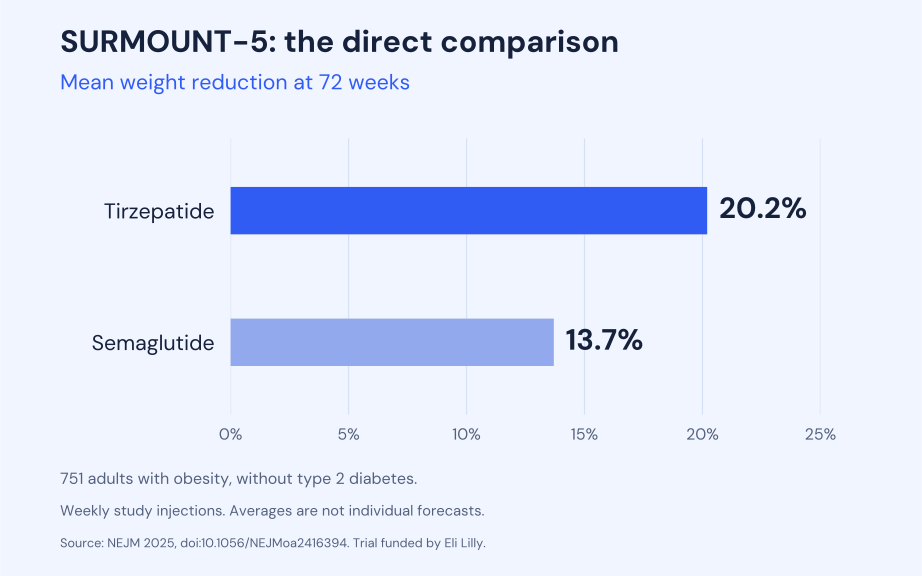
For a separate liver-disease trial with its own population and endpoints, read Tirzepatide for MASH: what SYNERGY-NASH measured.
For a separate trial and its interpretation, read Dulaglutide and kidney disease: reading AWARD-7.
The current product indication is narrower than a slogan
The FDA’s May 2026 Ozempic label includes reducing the risk of sustained eGFR decline, end-stage kidney disease and cardiovascular death in adults with type 2 diabetes and chronic kidney disease. The label also contains contraindications and warnings that remain relevant when discussing a potential benefit. [2]
Do not translate that indication into a claim that every semaglutide product is interchangeable for kidney care. A quote should name the medicine and formulation, not only “semaglutide.” When comparing providers, ask whether the clinician is managing diabetes and kidney disease or primarily offering weight-management prescribing. Those scopes can lead to different follow-up and coordination needs.
Two tests describe different parts of kidney health
NIDDK describes a blood test for estimated glomerular filtration rate, or eGFR, and a urine test for albumin as core tools for detecting and monitoring kidney disease. Filtration describes how well the kidneys filter blood; urine albumin can signal damage. The two are not interchangeable readings. [3]
A weight trend cannot substitute for either. Ask the treating clinician which results matter for your care and when they should be repeated. The aim is not to buy a large laboratory package independently. It is to make sure existing results reach the clinician who can interpret them and change the plan when appropriate.
A long-term benefit can coexist with an acute risk
The Ozempic label warns about acute kidney injury due to volume depletion and advises monitoring renal function when adverse reactions could lead to that problem. [2] This does not contradict FLOW: a long-term reduction in a studied outcome does not mean every episode of vomiting, diarrhea or poor fluid intake is harmless. Different time scales answer different questions.
Contact the clinical team promptly about persistent or significant symptoms, particularly if eating or drinking becomes difficult. Use urgent or emergency services when the situation warrants them. Do not use a favorable trial headline to explain away a current health concern or independently change other prescribed kidney or diabetes medicines.
Choose support around the condition you already have
For someone with diabetes and chronic kidney disease, the purchasing decision starts with the care already in place. Identify who owns diabetes treatment, kidney follow-up and medication review. Then ask whether an additional prescribing membership supplies a missing function or creates a second team without a clear coordination plan. A lower introductory fee cannot resolve that mismatch.
Our Ro versus Form Health comparison separates access navigation from a more continuous medical-and-nutrition model. The provider directory helps compare documented care terms. Before enrollment, obtain a complete recurring quote, clarify which laboratory work is covered and confirm how records will reach existing clinicians. The result should be a workable relationship around your diagnoses, rather than a subscription chosen from a kidney-benefit headline.
When weighing the care options, use Compare ongoing care models.
Sources
Research describes groups and specific study conditions. Your medical history, symptoms and treatment decisions require advice from your own qualified clinician.