In this article

What to know
- AWARD-7 studied diabetes with stage three or four CKD.
- The primary endpoint concerned glucose control; clinical kidney-event analyses were exploratory.
- All study groups also received mealtime insulin.
Kidney evidence needs the right comparator
AWARD-7 offers evidence about managing type two diabetes in people who already had moderate-to-severe chronic kidney disease. It was not a trial of preventing kidney disease in otherwise healthy adults seeking weight loss. The study compared dulaglutide with insulin glargine while participants also received mealtime insulin. [1] That last detail matters: the result does not mean every participant stopped insulin, and it does not justify replacing a current regimen without medical supervision. The useful clinical question is how a treatment strategy fits established diabetes and kidney care. A general claim that GLP-1 medicines protect kidneys loses the population, comparator and practical responsibilities that make this particular result interpretable.
This was a diabetes treatment strategy
The 52-week, open-label trial randomized 577 adults with stage three or four CKD to weekly injectable dulaglutide 1.5 mg, dulaglutide 0.75 mg, or daily insulin glargine. All groups used titrated insulin lispro. The primary endpoint was HbA1c at 26 weeks; kidney measures were secondary. [1] Open label means the main treatment strategies were known, although dulaglutide dose was masked. Neither feature makes the study uninformative. They explain what kind of evidence it supplies. A person reading a kidney headline should recognize that the trial first asked whether glucose control was acceptably comparable, then evaluated additional measures under a structured medical regimen.
The filtration result is a measured difference
Glucose control was similar, while estimated filtration at week 52 was higher with both dulaglutide doses than with glargine. Nausea and diarrhea were more frequent with dulaglutide, whereas symptomatic hypoglycemia occurred less frequently. [1] The kidney finding concerns reduced decline in a laboratory-based estimate, not proof that damaged kidneys were restored. A better average filtration estimate can be clinically interesting without promising dialysis avoidance for an individual. It also needs to be interpreted alongside the other care both groups received. A favorable secondary result is a reason for a more informed treatment discussion, rather than a reason to treat the medicine as a standalone substitute for ongoing kidney management.
The event analysis was exploratory
A subsequent exploratory analysis examined a composite of sustained filtration decline of at least 40%, end-stage kidney disease or death due to kidney disease. With dulaglutide 1.5 mg versus glargine, the observed composite proportions were 5% and 11%; the hazard ratio was 0.45, with a 95% confidence interval from 0.20 to 0.97. No kidney-disease deaths occurred. [2] The raw difference is six percentage points during this study, not a guaranteed six-point reduction for every patient. A hazard ratio also describes relative event timing, rather than the fraction of kidney function recovered. Those distinctions prevent an attractive relative percentage from becoming an exaggerated personal promise.
The subgroup should remain a subgroup
Most events arose among participants with macroalbuminuria, meaning a high level of albumin in urine. In that subgroup, the composite proportions were 7% with dulaglutide 1.5 mg and 22% with glargine, with a hazard ratio of 0.25. [2] That is an important signal, but a subgroup within an exploratory analysis carries a different evidentiary role from a new trial designed around that outcome. It should not be presented as independent replication or applied automatically to someone with a different kidney profile. A clinician can explain whether the patient resembles this subgroup and which broader treatment evidence is relevant. The reader does not need to infer eligibility from a urine result alone.
A kidney benefit does not erase treatment risk
The current Trulicity prescribing information warns about acute kidney injury related to volume depletion, particularly with gastrointestinal reactions, and describes increased hypoglycemia risk when combined with insulin or an insulin secretagogue. It also lists serious contraindications and warnings. [3] These cautions can coexist with favorable kidney findings in a randomized trial. The apparent contradiction disappears when benefit is understood as an average treatment comparison and risk as something that still requires individual management. For someone already using insulin, coordination is especially important. A consultation should identify who reviews symptoms and other medicines; it should not leave the patient to reconcile competing instructions from separate prescribing services.
Different GLP-1 trials answer different kidney questions
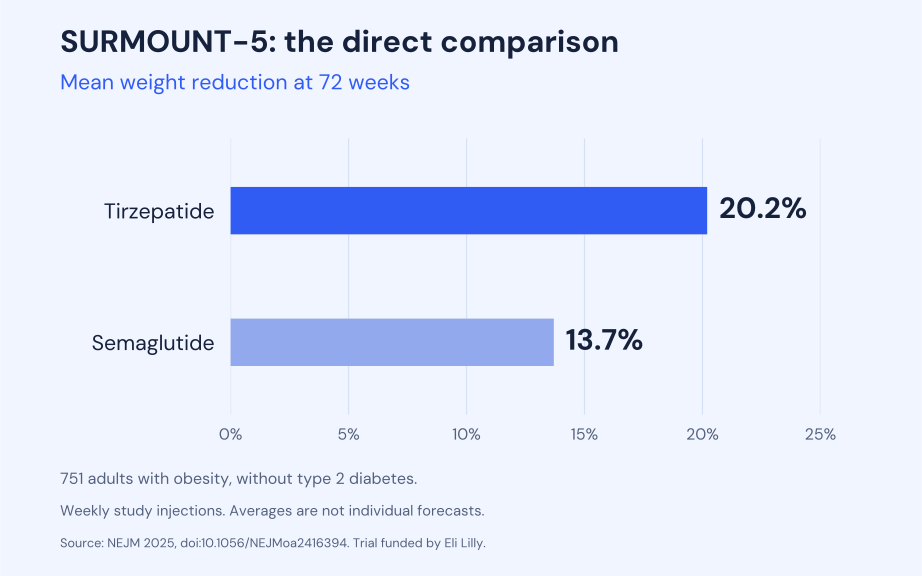
AWARD-7 should not be used to rank dulaglutide against semaglutide from unrelated percentages. This trial used an active insulin comparator, a defined CKD population and a glucose-control primary endpoint. [1] Its exploratory clinical-event report adds information from the same experiment. [2] A dedicated kidney-outcomes trial with a different medicine asks a related but separate question. That distinction matters when several favorable studies appear together on a clinic page. The clinic should explain which result supports the exact treatment being discussed. Evidence for a studied branded formulation does not establish equivalence for a compounded preparation or validate a broad menu of unrelated treatments.
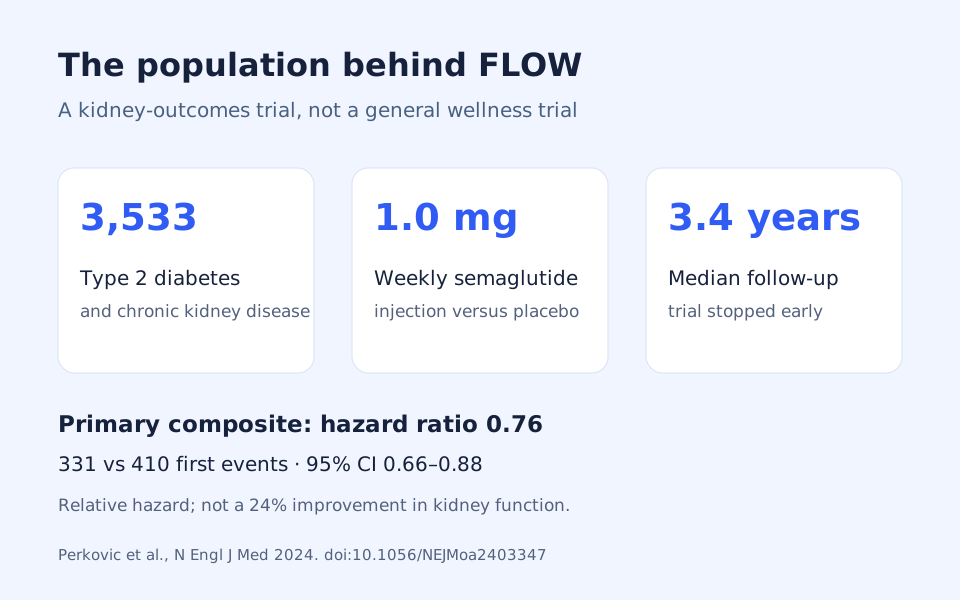
For a different medicine and trial design, read our FLOW kidney-outcomes analysis.
Ask how the existing care will connect
For a person with diabetes and CKD, useful service questions go beyond the monthly prescription price. Can the prescriber review the current treatment plan? Who coordinates laboratory follow-up and communicates with the clinician managing kidney disease? What happens if the medicine is difficult to tolerate or cannot be obtained? Those are questions about continuity, not reasons to choose a specific drug from this article. AWARD-7 supports a more precise discussion of one strategy in a complex clinical setting. It does not make an online weight subscription automatically suitable for that setting. Compare the actual care relationship after the clinical plan is clear, and keep exploratory findings labeled as exploratory.
For a broader clinical-care model, compare our One Medical review.
Sources
Research describes groups and specific study conditions. Your medical history, symptoms and treatment decisions require advice from your own qualified clinician.