In this article
What to know
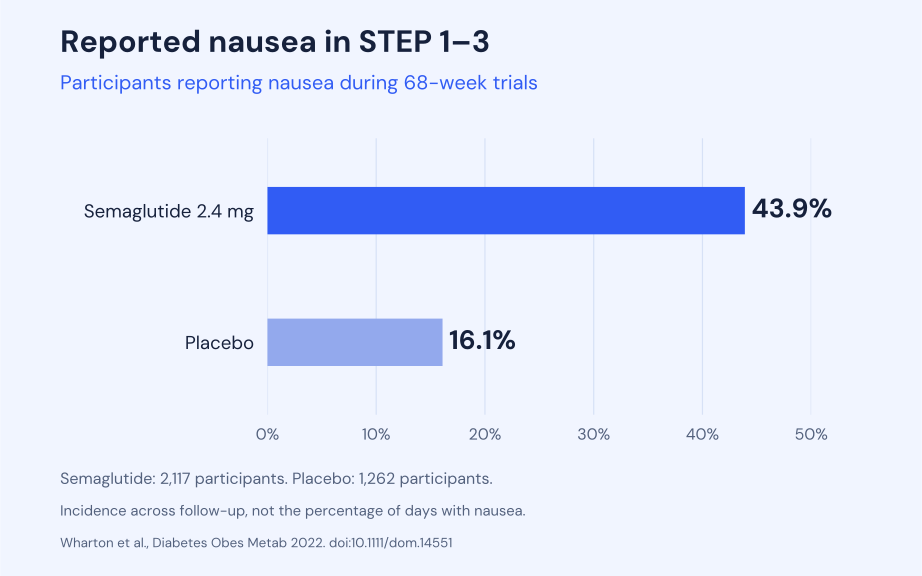
- In pooled STEP 1–3 data, nausea was reported by 43.9% on semaglutide 2.4 mg and 16.1% on placebo.
- Events were most frequent during or shortly after dose escalation; this does not predict an individual’s course.
- Nausea is not a requirement for weight loss, and persistent or severe symptoms need clinical attention.
Common does not mean constant
Nausea was common in trials of weekly semaglutide 2.4 mg, but a trial percentage is easy to misread. In a pooled analysis of STEP 1–3, 43.9% of semaglutide participants and 16.1% of placebo participants reported nausea during the 68-week trials. The groups included 2,117 and 1,262 people respectively. [1]
The absolute difference is 27.8 percentage points. It is not a statement that people felt nauseated on 43.9% of days, or that everyone who reported nausea experienced the same severity. The figure counts participants with a reported event during observation. That denominator matters when deciding what the number can tell you.
When it happened is part of the result
The analysis found that gastrointestinal events were most frequent during or shortly after dose escalation; most events were mild to moderate and transient. Some participants nevertheless needed a treatment interruption or stopped treatment because of gastrointestinal events. [1]
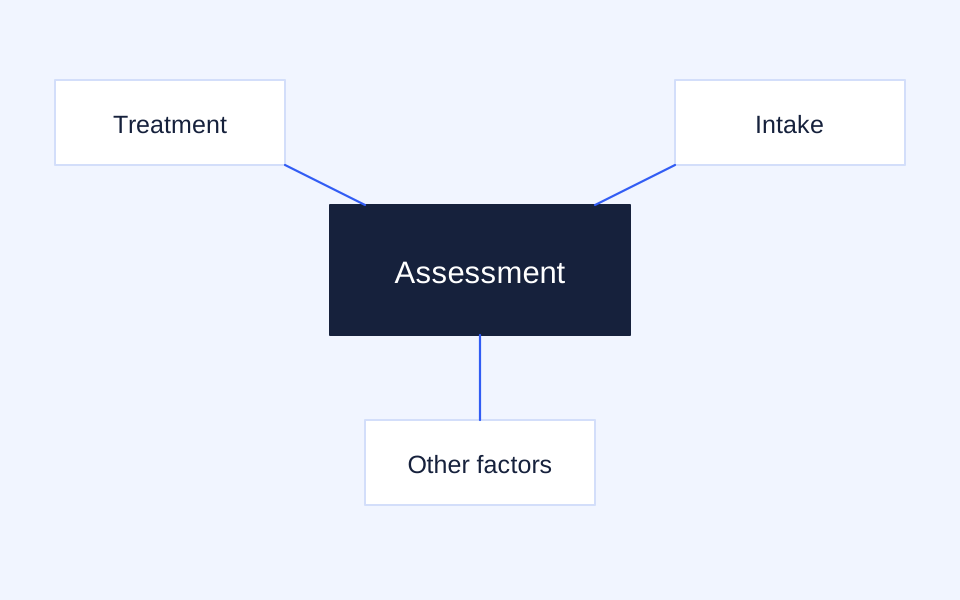
A pattern concentrated around escalation is useful context, not a deadline for symptoms to end. An individual episode can occur for another reason, and the paper cannot assess a reader’s current condition. Keep the exact medicine, formulation and recent treatment changes in the conversation with the prescribing clinician.
For another part of this decision, see Constipation on GLP-1 treatment: frequency and follow-up.
Feeling sick is not a test of whether treatment works
The same analysis estimated that gastrointestinal adverse events accounted for less than one percentage point of the additional weight reduction with semaglutide versus placebo. It concluded that weight loss was largely independent of those events. This was an analysis of trial data, not an experiment assigning people to nausea. [1]
The practical implication is straightforward: the absence of nausea is not evidence that a prescription has failed. Conversely, a more unpleasant experience is not proof of a stronger or better effect. Effectiveness and tolerability deserve separate assessment. A reader should not use either sensation as a reason to increase or otherwise change medication without clinical advice.
For a separate abdominal-symptom and follow-up question, read GLP-1 medicines and gallbladder risk: reading the trials.
The current label is broader than one trial table
The June 2026 Wegovy prescribing information covers several presentations, including tablets and injectable options. The pooled numbers above concern the studied weekly 2.4 mg injection regimen. They should not be silently transferred to every dose, an oral product, a different medication or an unstudied preparation. [2]
The label identifies potentially severe gastrointestinal reactions, pancreatitis, gallbladder disease and kidney injury related to volume depletion among important safety concerns. A population average cannot determine whether a person’s symptoms are an expected effect or a problem requiring prompt evaluation. [2]
What deserves prompt medical attention
The medication guide advises immediate contact with a healthcare provider for severe abdominal pain that does not go away, which can occur with or without nausea or vomiting. It also advises contact for nausea, vomiting or diarrhea that does not go away, because dehydration can contribute to kidney problems. Do not wait for the average trial timeline to pass when symptoms are severe, persistent or worsening. [2]
For a suspected emergency, use emergency care. A comparison page or an online provider review cannot evaluate symptoms, recommend a dose adjustment or decide whether another medicine is needed.
Make the follow-up conversation specific
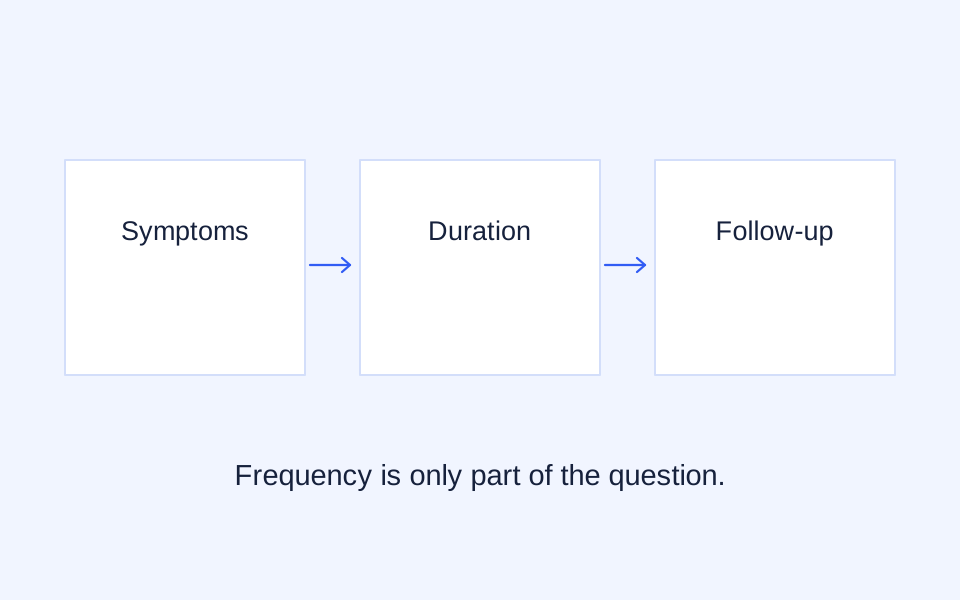
Describe when the symptoms began, whether they changed after a treatment change, whether eating or drinking has become difficult and how daily activities are affected. The clinician can decide what assessment and treatment changes are appropriate. This is more informative than saying only that a side effect is common online.
The service arrangement matters too. Before enrolling, ask how to contact the clinical team between routine visits, what response channel is available and what to do outside its operating hours. A refill workflow is not the same as access to clinical follow-up. Where a service promises support, the review should make the practical terms of that support understandable.
Compare care separately from medication statistics
Two providers can advertise access to the same medication while offering different follow-up arrangements, membership terms and pharmacy routes. The drug’s trial rate does not rank those services. Compare clinical access, the full recurring charge and the plan for reassessment rather than treating a low introductory price as a complete care model.
A useful question for the service is what happens financially if the clinician changes the plan: whether charges continue, which fees are nonrefundable and how cancellation works. Those terms do not decide the medical answer, but they help prevent a purchasing commitment from being mistaken for an obligation to continue a particular treatment.
When weighing the care options, use Ro versus Form Health.
For a separate product and purchase assessment, read Big Easy Weight Loss review.
Sources
Research describes groups and specific study conditions. Your medical history, symptoms and treatment decisions require advice from your own qualified clinician.