In this article
What to know
- Zepbound’s four-week and Foundayo’s thirty-day contraceptive precautions apply after starting and after every dose increase.
- Wegovy’s two-month interval is product-specific.
- Limited observational exposure data do not establish safety for planned treatment during pregnancy.
The short answer is product-specific
For weight management, these labels advise stopping when pregnancy is recognized; fetal risk is possible and human safety uncertain. [1] [2] [3] Birth-control precautions also differ: a warning for one medicine cannot be copied across every GLP-1 product.
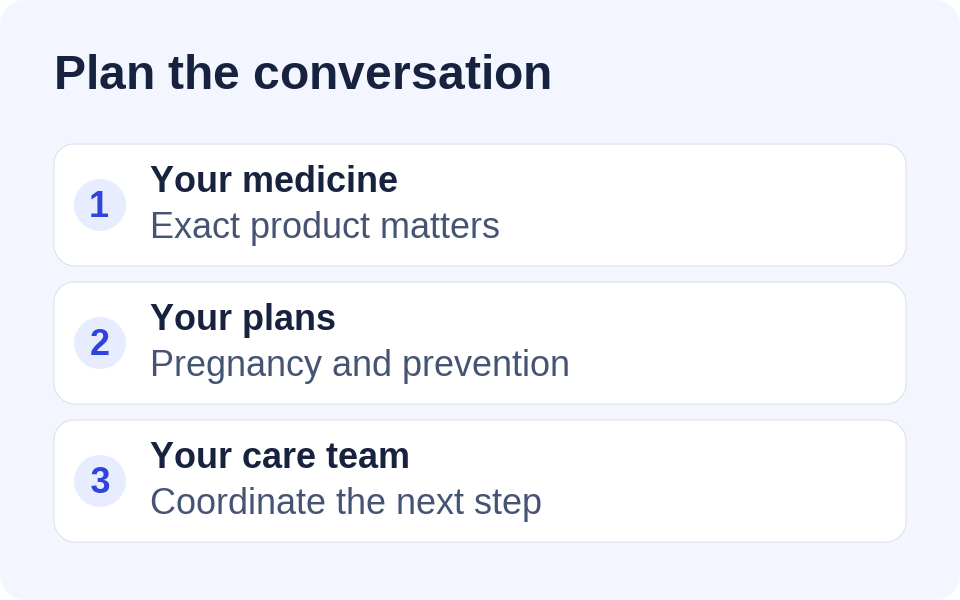
This guide addresses the named US products and their weight-management use. FDA recommends making a medication plan with the healthcare team before pregnancy. [6] The relevant discussion includes the exact formulation, contraception, treatment indication and care needed during a transition; an online comparison cannot select that plan for an individual.
Do GLP-1 medicines affect birth-control pills?
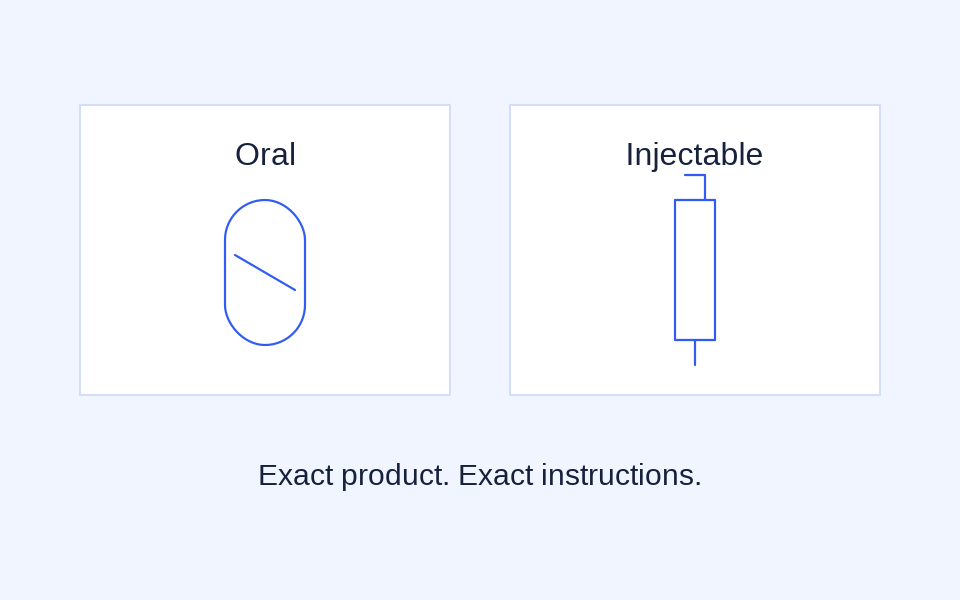
The active ingredient matters more than whether treatment is swallowed or injected. The oral-versus-injectable guide distinguishes the marketed preparations before comparing their routines. A daily tablet and a weekly injection can have different interaction warnings; the contraceptive pill is a separate medicine whose instructions also need review.
Their labels cite delayed stomach emptying; non-oral hormonal contraception should not be affected. Foundayo’s oral-contraceptive absorption precaution has not been evaluated in a clinical trial. [2] [3] That is not a measured contraceptive-failure rate. Ask the pharmacist how the instructions apply to the actual contraceptive. [6]
| US product | What the label says about oral hormonal contraception |
|---|---|
| Zepbound (tirzepatide injection) | Use a non-oral contraceptive method or add barrier protection for four weeks after starting and again after each dose increase. [2] |
| Foundayo (orforglipron tablets) | Use a non-oral method or add barrier protection for thirty days after starting and again after each increase. [3] |
| Wegovy (semaglutide injection or tablets) | Oral-tablet interaction studies found no clinically significant change in ethinyl estradiol or levonorgestrel exposure; no temporary-backup instruction is specified. Those findings do not guarantee contraceptive protection. [1] |
How long before trying to conceive?
The Wegovy label specifies stopping at least two months before a planned pregnancy because semaglutide persists. [1] Neither the Zepbound nor Foundayo label specifies a numerical preconception interval. [2] [3] Absence of a labeled number is not permission to continue until conception, nor a reason to borrow a different medicine’s interval. Discuss timing before trying to conceive.
Wegovy’s label allows a pregnancy benefit-risk assessment for MASH with advanced liver fibrosis. [1] That is an important limitation on a blanket statement about all Wegovy use. A specialist should handle the competing risks of the underlying disease.
What early-pregnancy exposure studies can tell us
A 2024 prospective study followed 168 pregnancies exposed to a GLP-1 receptor agonist in the first trimester, with separate diabetes and overweight/obesity comparison groups. It did not detect an increased major-birth-defect risk, but the estimates had wide confidence intervals. [4] This is not proof that exposure cannot cause harm.
The medicines were liraglutide, semaglutide, dulaglutide and exenatide; treatment usually stopped early, at a median of five gestational weeks. Tirzepatide and orforglipron were not represented. [4] The study therefore cannot establish safety for Zepbound or Foundayo, prolonged use through pregnancy, or a particular individual. Accidental exposure and planned continuation are different questions.
Stopping for pregnancy needs follow-up, not a weight-loss target
A 2025 retrospective study matched 448 pregnancies with prior GLP-1 medicine orders to 1,344 unexposed pregnancies for its main analysis. Mean gestational weight gain was approximately 3.3 kg greater in the exposed group. The exposure window extended from three years before conception to ninety days afterward. [5] It was not a trial assigning people to stop or continue a medicine during pregnancy.
Prescribing records do not prove exactly when a medicine was taken, and residual confounding remains possible. [5] The weight-regain evidence guide covers withdrawal trials outside pregnancy; those results cannot supply a pregnancy weight target. This observational finding supports discussing follow-up with the maternity and prescribing teams. It does not establish that continuing a GLP-1 medicine in pregnancy would be safer or prevent complications.
If pregnancy is recognized during treatment
Contact the prescriber and pregnancy-care team promptly with the product name, last administration date and other medicines. Exposure alone does not determine the pregnancy’s outcome. FDA explains voluntary pregnancy-exposure registries, which collect outcomes rather than provide immediate treatment advice. [6] Ask the clinical team about the applicable registry and a plan for ongoing health needs.
Breastfeeding is a separate assessment
The Wegovy label distinguishes tablets, for which breastfeeding is not recommended, from injections, which require weighing clinical need and possible infant effects. Zepbound describes low or undetectable milk levels after a single dose but lacks infant-outcome data; that is not a blanket breastfeeding-safety finding. Foundayo is not recommended for nursing women. [1] [2] [3] Decisions after delivery need a fresh review of the exact product and care plan.
Bring the product and the plan to the appointment
Bring the medication packaging or prescription, contraceptive name, recent changes and pregnancy plans. Ask who will coordinate prescribing, reproductive care and follow-up if treatment changes. FDA’s planning advice applies to prescription medicines, over-the-counter products and supplements. [6] A useful appointment resolves those questions together rather than treating a trial average, a shorter routine or a membership offer as an individual safety decision.
Sources
- Wegovy prescribing information, revised June 2026: interactions, pregnancy and lactation (opens in a new tab)
- Zepbound US prescribing information, revised November 2026 (opens in a new tab)
- Foundayo US prescribing information, revised July 2026 (opens in a new tab)
- Dao et al., 2024: prospective early-pregnancy GLP-1 exposure cohort (opens in a new tab)
- Maya et al., JAMA 2025: pregnancy outcomes after GLP-1 discontinuation (opens in a new tab)
- FDA: medicine and pregnancy, planning and exposure registries (opens in a new tab)
Research describes groups and specific study conditions. Your medical history, symptoms and treatment decisions require advice from your own qualified clinician.