In this article
What to know
- The original STEP-HFpEF trial studied diagnosed HFpEF with obesity and no diabetes.
- A questionnaire improvement is not a mortality result.
- SUMMIT used another drug and a different clinical-event question.
The answer concerns a defined form of heart failure
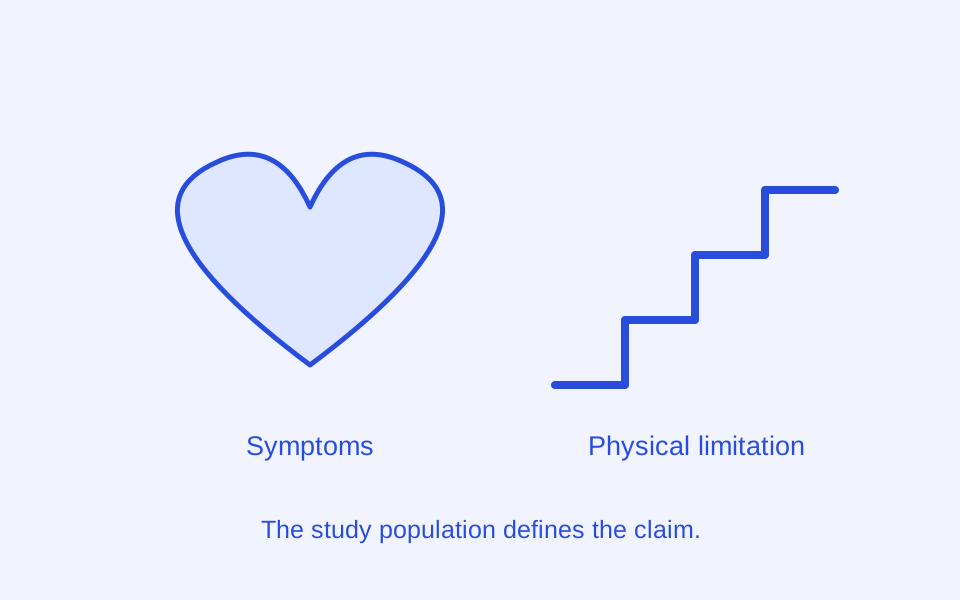
Semaglutide improved symptoms and physical limitations in the original STEP-HFpEF trial involving people with obesity and heart failure with preserved ejection fraction. [1] The result concerns a diagnosed clinical syndrome, not ordinary tiredness or every form of heart failure. It also asks the reader to separate how people feel and function from whether a treatment prevents hospitalizations or death. Both questions matter, but they require the right outcomes and follow-up. A stronger symptom score should not be quietly rewritten as a survival benefit.
What preserved ejection fraction meant in the trial
The original study randomized 529 participants with obesity and HFpEF to weekly subcutaneous semaglutide 2.4 mg or placebo for 52 weeks. It excluded diabetes and was funded by Novo Nordisk. [1] The program-design publication describes entry criteria including an ejection fraction of at least 45%, symptoms and objective evidence supporting the diagnosis. [2] A preserved percentage alone therefore did not establish eligibility.
That distinction is useful outside the trial. A test result needs interpretation with symptoms, history and the rest of the clinical evaluation. An online questionnaire about weight cannot diagnose the same population merely because it includes a question about breathlessness. Established heart-failure care remains the setting in which this evidence should be considered.
A questionnaire captured a patient-relevant difference
At 52 weeks, the Kansas City Cardiomyopathy Questionnaire clinical summary score improved by 16.6 points with semaglutide and 8.7 with placebo; the estimated between-group difference was 7.8 points. Higher scores represent better health status. Mean weight change was −13.3% versus −2.6%. Exercise function also improved. [1]
The symptom-score difference is measured in points, not a percentage reduction in heart failure. A group average does not establish how much easier one person's stairs will feel. Still, symptom burden is a real outcome. It deserves to be described directly, without making it sound more important by attaching a different, unmeasured promise.
For a separate tirzepatide trial in obesity-related heart failure, read Tirzepatide and HFpEF: reading the SUMMIT results.
The trial program deliberately separated diabetes populations
The STEP-HFpEF design included a companion trial for people who also had type 2 diabetes. Both compared the study medication with placebo on top of usual care, but diabetes status defined separate study populations. [2] That design choice matters when someone quotes the first trial's average. A reader should know which group produced the number before using it in a discussion about their own care.
Separate populations also help explain why evidence expands through several studies rather than one universal obesity result. The question is not simply whether a medicine reduces weight. It is whether a particular regimen improves outcomes relevant to a particular condition, alongside existing treatment. The medical history that seems like a footnote in an advertisement can be central to the research.
SUMMIT asked a related question with a different drug
SUMMIT randomized 731 people with obesity and HFpEF to tirzepatide or placebo, with a median follow-up of 104 weeks. Cardiovascular death or worsening heart failure occurred in 9.9% and 15.3%, respectively. [3] This was a clinical-event composite using a different medication, not a head-to-head test against semaglutide.
The composite should not be described as proof of lower cardiovascular mortality on its own. Its components matter, and fewer worsening-heart-failure events can drive the combined result without demonstrating fewer deaths. The correct conclusion is specific to the endpoint reported. Neither trial allows a clean ranking of the two drugs by placing their symptom scores beside each other.
Why the service model matters without becoming trial evidence
Someone already managing heart failure may have several clinicians, prescriptions and monitoring needs. A weight-care service has to fit into that arrangement. Establish who will review the existing medication list, communicate changes and handle concerns between appointments. The trial evidence cannot answer whether a particular subscription does those jobs well. Those are service questions that require their own clear answers.
Likewise, a trial regimen does not establish that a compounded preparation or another formulation produces the same result. Keep the actual prescription name and route visible when discussing the paper. A familiar ingredient is not enough to extend the evidence across every product offered online.
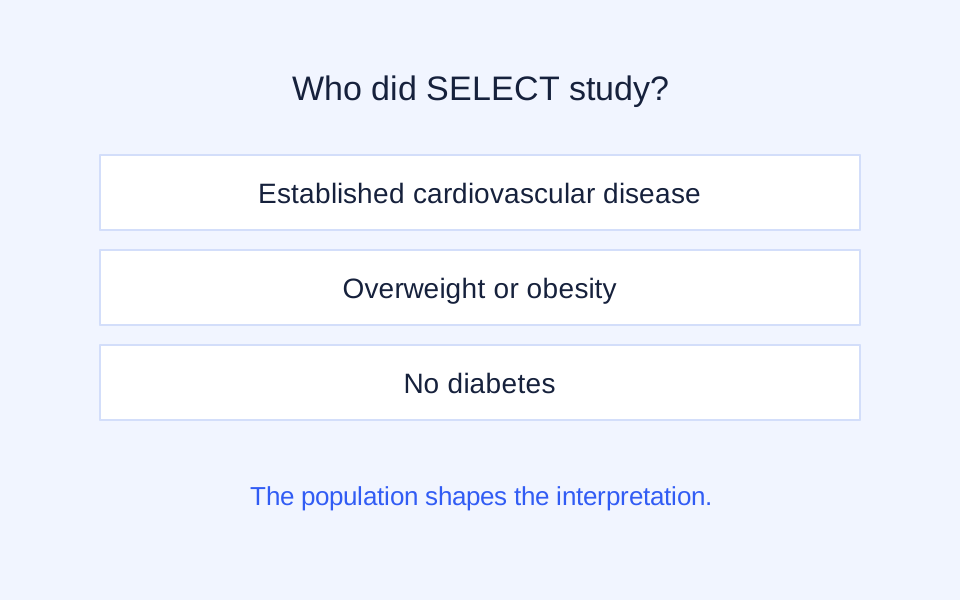
For a related perspective, read GLP-1 cardiovascular benefits: who SELECT actually studied. It addresses a different part of the same practical decision.
Frame the decision around health status and continuity
A useful consultation begins with the confirmed diagnosis, current treatment and the activities symptoms limit. Ask how the study applies and which outcomes would be followed if treatment is chosen. The answer might include symptoms, physical function, weight and a plan for tolerability; it should be individualized by the treating team. New or worsening symptoms need clinical attention, rather than being assumed to be an ordinary part of weight treatment.
When comparing access options, favor clarity about responsibility and continuity. A lower introductory fee does not compensate for an unclear handover between care teams. STEP-HFpEF makes a meaningful case for studying how treatment changes daily health status. It does not remove the need for continuing heart-failure care or decide which online platform is best.
When evaluating support, our Form Health review explains the service and commitment behind the offer.
Sources
Research describes groups and specific study conditions. Your medical history, symptoms and treatment decisions require advice from your own qualified clinician.