In this article

What to know
- The interim report concerns 800 participants at 72 weeks.
- Biopsy improvement is distinct from proven prevention of liver failure.
- F2–F3 MASH findings should not be transferred to cirrhosis or other formulations.
The result concerns diagnosed liver disease
ESSENCE supports a meaningful but specific conclusion: once-weekly semaglutide improved liver tissue findings in adults with metabolic dysfunction-associated steatohepatitis and stage two or three fibrosis. [1] MASH involves inflammation and liver-cell injury; fibrosis describes scar tissue. A report of fat on a scan is not enough to establish that someone matches this trial population. The useful starting question is therefore which condition and fibrosis stage a clinician has identified. Buying a weight-management prescription because it might help the liver skips that distinction. This research is most useful in an existing clinical conversation about documented liver disease, rather than as a reason to diagnose yourself from a metabolic-health advertisement.
The first report is an interim analysis
The double-blind trial assigned 1,197 participants to weekly subcutaneous semaglutide 2.4 mg or placebo for a planned 240 weeks. The published part-one results concern the first 800 at 72 weeks, with 534 assigned semaglutide and 266 placebo. [1] The baseline report shows that most of this first group had F3 fibrosis and more than half had type two diabetes. [2] This is an important population for treatment research, but it is not a sample of everyone seeking modest weight loss. The protocol separates tissue-based outcomes from later clinical outcomes. Calling a planned multiyear trial complete after its interim report would erase precisely the longer-term question it was designed to answer.
Keep the two biopsy endpoints separate
Resolution of steatohepatitis without fibrosis worsening occurred in 62.9% with semaglutide and 34.3% with placebo; the estimated difference was 28.7 percentage points. Fibrosis improvement without worsening steatohepatitis occurred in 36.8% and 22.4%, an estimated 14.4-point difference. Gastrointestinal adverse events were more frequent with semaglutide. [1] These are different endpoints, not two descriptions of the same success rate. A reader should not hear the larger percentage and assume that amount of scar tissue disappeared. Neither percentage describes an individual prognosis. Ask which endpoint a quoted result represents, whether the accompanying condition is included, and how that endpoint relates to the treatment goal being discussed.
The approval has a precise boundary
The FDA approved Wegovy injection for adults with noncirrhotic MASH and moderate-to-advanced fibrosis under accelerated approval, based on improvement in MASH and fibrosis. The agency says continued approval may depend on verification of clinical benefit in confirmatory trials. [3] An approved use is consequential, but accelerated approval does not turn a biopsy response into demonstrated prevention of transplantation or death. The product, route and indication matter together. An advertisement for another formulation cannot inherit the claim merely because it uses the same molecule name. For a patient, the sensible question is whether the proposed actual prescription matches the approved indication and what follow-up the treating team recommends.
Cirrhosis is not the same evidence setting
A separate phase-two study enrolled 71 adults with compensated NASH-related cirrhosis and compared weekly semaglutide 2.4 mg with placebo for 48 weeks. It did not show a statistically significant improvement in its primary fibrosis endpoint or in NASH resolution. [4] The older name NASH appears in that report; the more important clinical distinction here is established cirrhosis. It would be misleading to transfer the favorable ESSENCE result to this group without qualification. Conversely, a small negative cirrhosis study does not cancel a positive trial in F2–F3 disease. They answer different questions. The disease stage helps explain why the evidence must be matched carefully rather than reduced to a universal liver-health verdict.
A weekly regimen still requires continuing care
The trial regimen describes the experiment and does not provide a personal escalation plan. A prescription discussion should cover the intended product, other medicines, symptoms and the clinician responsible for follow-up. The FDA identifies nausea, diarrhea and vomiting among common adverse reactions and retains important warnings and contraindications for the approved product. [3] That means a favorable biopsy result belongs beside a tolerability discussion, not above it. A service that makes refills easy may still leave unanswered who reviews new symptoms or coordinates with a liver specialist. Those responsibilities are especially worth clarifying when general weight care and treatment of a defined liver condition involve different teams.
Do not rank liver treatments by weight-loss headlines
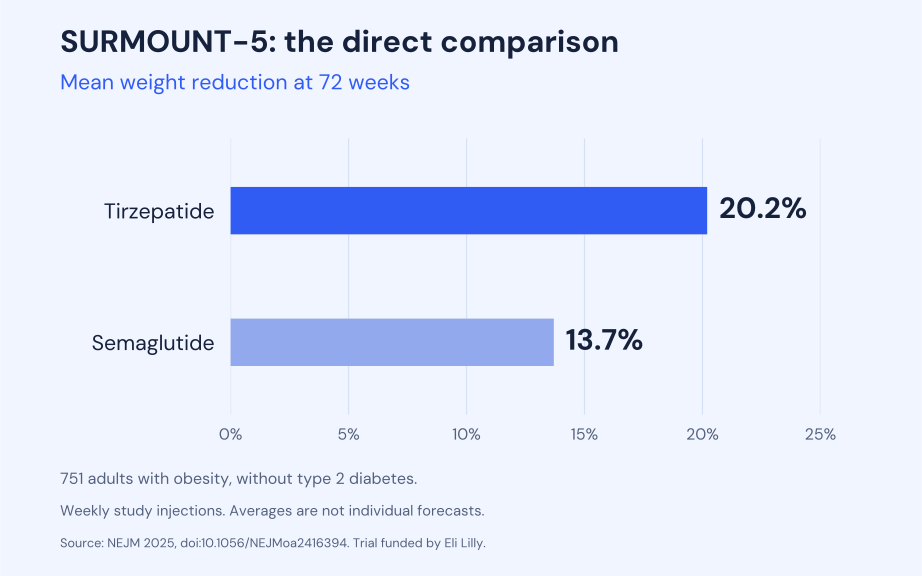
ESSENCE was not a head-to-head comparison with tirzepatide or every other liver treatment. Results from another trial cannot supply the missing comparison simply because both studies discuss MASH. Different populations, endpoints and follow-up can produce different-looking percentages. The comparison that matters for an individual includes eligibility, the actual product, treatment burden and the evidence relevant to their disease stage. A provider review can help explain access and costs, but it cannot establish the preferred liver treatment from checkout prices. Keep the clinical decision with the clinician who understands the diagnosis, then compare services on how reliably they support that decision.
For a separate drug and trial, read our tirzepatide MASH trial analysis.
Use the study to ask a more useful question
A useful consultation can begin with three connected questions: does my diagnosis match the population studied, which outcome is treatment intended to improve, and how will continuing care be coordinated? That is more informative than asking whether a popular medication is good for the liver in general. ESSENCE gives a stronger basis for discussing a specific treatment in a defined setting while leaving clinical outcomes beyond the interim biopsy report unresolved. If the proposed service mainly offers general weight management, find out whether it can work with the clinician managing the liver condition. Clear responsibilities, realistic expectations and an accurate description of the evidence make the research useful in an actual treatment decision.
For one continuing weight-care model, compare our Form Health review.
Sources
Research describes groups and specific study conditions. Your medical history, symptoms and treatment decisions require advice from your own qualified clinician.