In this article
What to know
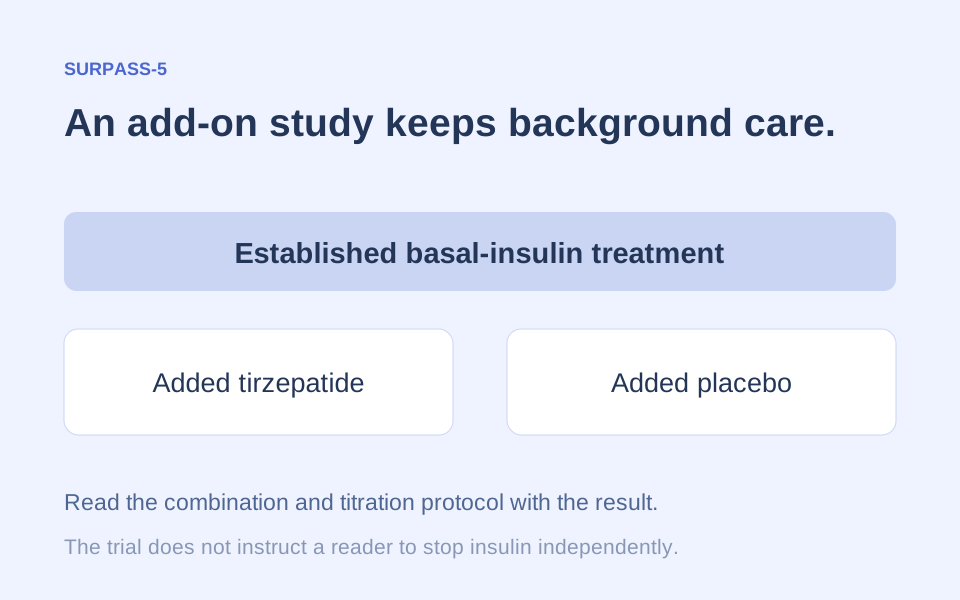
- SURPASS-5 tested tirzepatide added to titrated glargine in diabetes. It supports an add-on strategy, not independently stopping insulin.
- Population, comparison and follow-up determine what the finding can establish.
- A study average is not an individualized outcome prediction.
An add-on trial is not a replacement trial
SURPASS-5 examined tirzepatide added to an existing basal-insulin regimen in adults with type 2 diabetes and inadequate glucose control. Its main result favored tirzepatide for HbA1c reduction, with weight reduction as well. The foundational detail is that participants continued insulin glargine under the study protocol. A headline about needing less insulin should not be allowed to turn this into evidence that people can stop insulin on their own. The study tested a supervised combination strategy. Reading it accurately requires keeping the background treatment visible alongside the added drug, especially because hypoglycemia and monitoring become important when therapies are combined.[1] [2]
For the related decision, read the connected evidence.
The population and randomization
The 40-week double-blind trial randomized 475 adults to tirzepatide 5 mg, 10 mg or 15 mg once weekly, or a matching placebo, while continuing once-daily glargine with or without metformin. The named doses identify the study groups; they are not a personal starting prescription. Both the active and placebo groups had background insulin managed under the protocol. That makes the comparison different from tirzepatide versus no diabetes treatment. It is also different from starting a basal insulin in someone who has never used it. The trial's result belongs to the clinical stage and treatment context actually studied.[1]
The glucose result used percentage points
At week 40, average HbA1c reductions with the 10 mg and 15 mg groups were about 2.40 and 2.34 percentage points, compared with 0.86 points with placebo. The 5 mg group also showed a larger average reduction than placebo. These are changes in a glucose measure, not equivalent percentage reductions in mortality or complications. An apparent numerical ordering between active doses also should not be treated as proof that the highest group always delivers the greatest personal response. The randomized trial supports the prespecified contrasts with placebo; it does not supply an individualized dose-selection algorithm.[1]
Weight changed differently in the groups
The report described average weight reductions of 5.4, 7.5 and 8.8 kg with tirzepatide 5, 10 and 15 mg respectively, compared with a 1.6 kg increase with placebo. Those figures are group averages within a 40-week diabetes trial, not an obesity-program guarantee. They also cannot be compared casually with percentages from a different population followed for a different duration. A person using basal insulin may have clinical priorities beyond weight, including glucose patterns and avoidance of low glucose. The useful interpretation keeps the weight outcome alongside the primary glycemic question rather than allowing one to replace the other.[1]
For the related decision, read our support-model comparison.
Titrated insulin is an active part of the protocol
The study's background glargine treatment was adjusted within a monitored research plan. That matters for both benefit and safety: the observed outcome reflects the combination and how it was managed, not simply adding a medicine to an otherwise unchanging routine. Current Mounjaro labeling warns that use with insulin or an insulin secretagogue may increase hypoglycemia risk and may require changes assessed by the clinician. A consumer article should therefore avoid converting trial insulin changes into instructions for home adjustment. Ask the prescriber who will review readings and how concerns are handled when treatment changes.[1] [2]
Completing follow-up is different from staying on the drug
About 95% of randomized participants completed the trial, but treatment discontinuation differed across groups. The paper reports premature study-treatment discontinuation of 10%, 12% and 18% in the three tirzepatide groups, versus 3% with placebo. Those figures show why a high study-completion rate should not be described as near-universal medication persistence. People can remain in follow-up after stopping an assigned treatment. Tolerability and continued use are part of interpreting the result, even when the primary efficacy finding is favorable. A program citing the trial should not erase that distinction from the practical story.[1]
Safety requires more than an average outcome
Current labeling contains a boxed thyroid C-cell tumor warning, contraindications and warnings involving pancreatitis, severe gastrointestinal effects, volume-depletion-related kidney injury and other clinical concerns. These must be assessed in the context of the actual patient. Combining treatments also requires attention to other medicines and the ability to monitor safely. The study is not a complete safety guide for an individual and should not be used to choose a preparation from a catalog. A clinician needs the exact product, medical history and current regimen. For a person already taking insulin, continuing access to that clinical review is an essential part of the care model.[2]
For the related decision, read our 9Amhealth review.
A related trial asked a different intensification question
SURPASS-6 later compared adding tirzepatide with adding mealtime insulin lispro in people already receiving basal insulin. That active-comparator question differs from SURPASS-5's placebo-controlled add-on design. It can inform a broader discussion about intensification, but its groups should not be stitched into SURPASS-5 as though every strategy was randomized together. Comparing unrelated study averages loses the protection provided by a direct within-trial comparison. The right approach is to identify which trial addresses the actual options under consideration, then examine its population, background regimen and follow-up. A shared SURPASS name does not make all the designs interchangeable.[3]
What to ask about a proposed care plan
Ask which clinical goal requires another treatment, how the current insulin regimen will be reviewed and who is responsible for follow-up between visits. Clarify the exact approved or compounded product proposed; evidence from the studied injection does not establish equivalent performance for every preparation with the same ingredient. Also ask what happens if the medicine cannot be tolerated or coverage changes. These are practical applications of the combination-treatment question, not evidence that one particular telehealth platform reproduces the trial. Strong medication evidence is most useful when paired with a workable plan for monitoring and communication.
The conclusion worth keeping
SURPASS-5 supports tirzepatide as an effective add-on to titrated basal insulin for average glucose lowering and weight reduction in the studied diabetes population. The result does not establish that insulin can be stopped independently or that a dose choice can be made from the group averages. Background treatment, adverse effects and persistence remain part of the evidence. Use the study to frame a clinical discussion about appropriate intensification and continuing oversight. The meaningful purchase is access to a suitable, monitored treatment plan, with the evidence attached to the actual formulation and combination being considered.[1] [2] [3]
Sources
Research describes groups and specific study conditions. Your medical history, symptoms and treatment decisions require advice from your own qualified clinician.