In this article
What to know
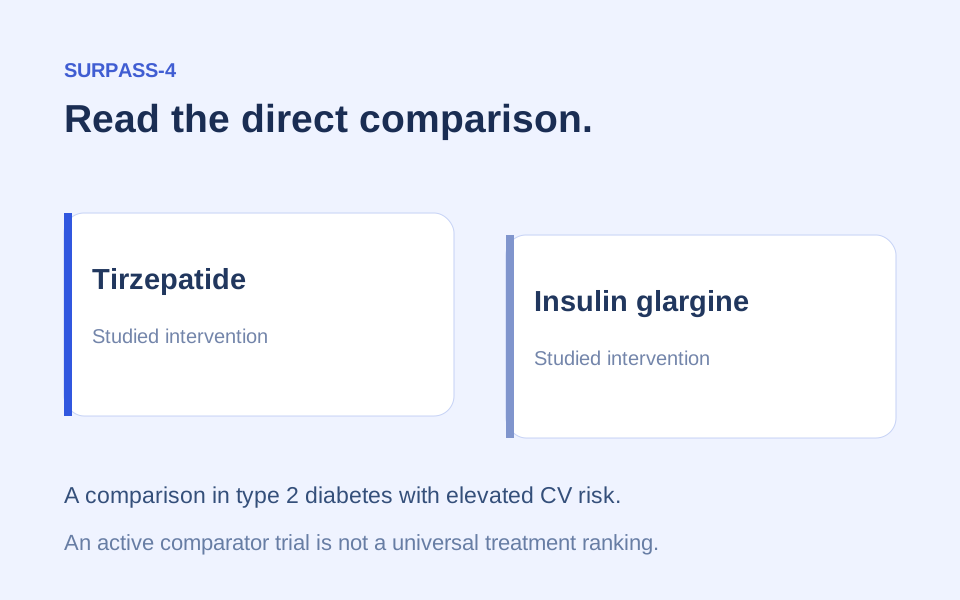
- SURPASS-4 compared tirzepatide with insulin glargine in high-risk type 2 diabetes. Kidney follow-ups need their post hoc context.
- The studied population, comparator and follow-up determine how far the result travels.
- Use the findings to frame a discussion, rather than predict an individual result.
A diabetes escalation question
SURPASS-4 compared tirzepatide with titrated insulin glargine in adults with type 2 diabetes and increased cardiovascular risk. The primary comparison showed greater average glucose lowering with the tested tirzepatide strategies, alongside less clinically significant or severe hypoglycemia. That is a consequential result for a diabetes treatment discussion. It is not evidence that insulin is unnecessary or that someone can replace an existing insulin regimen without supervision. The trial's participants, background medicines and monitored treatment strategy matter. A good reading begins with the actual clinical question: how did these assigned options perform in this particular population under a structured protocol?[1]
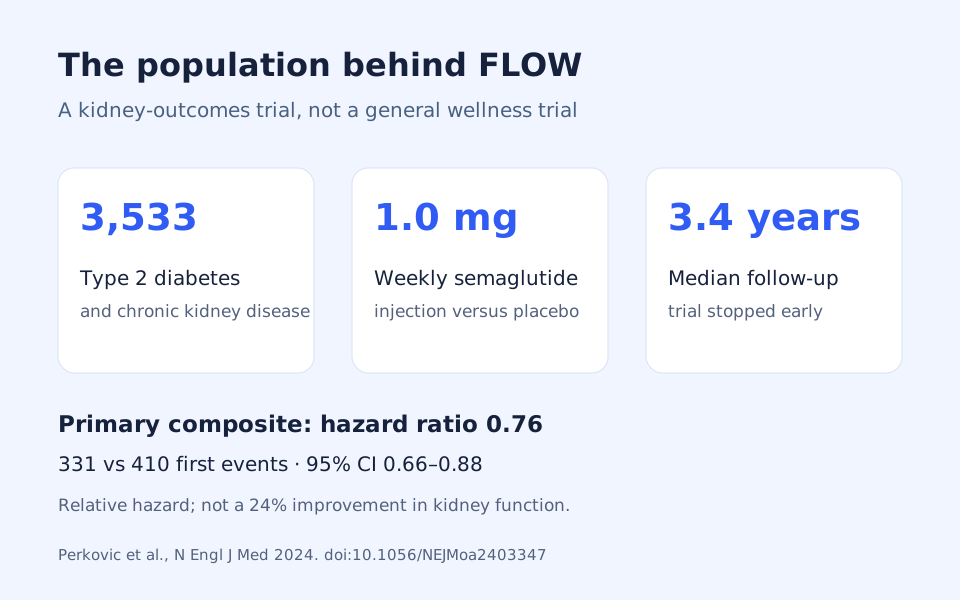
For the connected question, read the dedicated FLOW kidney trial.
Who was randomized and for how long
The study randomized 2,002 participants, with 1,995 receiving treatment. Assigned groups received weekly tirzepatide at 5, 10 or 15 mg, or daily insulin glargine titrated within the protocol. Participants had inadequately controlled type 2 diabetes despite oral medication and established cardiovascular disease or high cardiovascular risk. The main HbA1c comparison was at 52 weeks; follow-up could extend further. Treatment was open label, so assignment was known. That is a practical design for comparing different injection schedules, but knowledge of treatment can influence reporting and behavior. It does not cancel randomization; it adds a limitation that should accompany interpretation.[1]
The glucose result needs its units
At 52 weeks, average HbA1c reductions were 2.43 and 2.58 percentage points in the tirzepatide 10 mg and 15 mg groups, compared with 1.44 points with glargine. These are changes in HbA1c, not percentage reductions in cardiovascular risk. Insulin glargine was an active treatment with a protocol for titration, which makes the comparison more useful than an uncontrolled before-and-after story. Nevertheless, a larger average reduction does not identify the appropriate target for every person. Older adults, people vulnerable to hypoglycemia and those with complicated treatment histories may have different priorities. The trial supplies comparative evidence for a clinician to interpret.[1]
Hypoglycemia depends on the rest of treatment
Clinically significant hypoglycemia below 54 mg/dL or severe hypoglycemia occurred less often with tirzepatide than with glargine in the study. Background sulfonylurea use influenced that risk, so quoting a rate without the treatment context can mislead. A result from a monitored trial should not be turned into a promise that tirzepatide cannot cause low blood sugar. Current product information warns about combining it with insulin secretagogues or insulin. The practical takeaway is to have the entire medication list assessed and a clear monitoring plan. It is not to stop another drug, reduce a dose or tolerate concerning symptoms independently.[1] [4]
For the connected question, read the AWARD-7 insulin comparison.
The kidney report came later
A subsequent analysis examined kidney outcomes within SURPASS-4. It reported a slower average decline in estimated glomerular filtration rate with pooled tirzepatide treatment than with glargine: about 1.4 versus 3.6 mL/min/1.73 m² per year. This is a post hoc analysis of the same trial, rather than a separate kidney-outcomes experiment. That distinction affects the strength of the inference, especially when a study generates many possible follow-up questions. The result is a meaningful signal for further evaluation and clinical context. It should not be described as definitive proof that tirzepatide prevents kidney failure in every person with diabetes.[2]
Read the components of a composite
The renal analysis used a composite that included a substantial eGFR decline, end-stage kidney disease, kidney death or new macroalbuminuria. These outcomes are related but not equivalent in severity or frequency. A favorable composite result cannot automatically be relabeled a reduction in dialysis or kidney death. Readers should ask which components occurred most often and whether the individual outcomes were sufficiently numerous for reliable conclusions. The reported hazard ratio also describes relative event timing over follow-up, not a direct absolute probability reduction. Turning it into a number needed to treat without suitable cumulative risks and a time horizon would add precision that the headline does not supply.[2]
Why investigators checked cystatin C
Creatinine-based estimates of kidney function can be affected by changes in muscle and body composition, which makes interpretation interesting when a treatment also changes weight. A further SURPASS-4 analysis considered cystatin C-based estimates and reported findings consistent with a kidney-function advantage. That helps test one possible measurement explanation; it does not transform the post hoc program into several independent replications. All these analyses remain connected to the original cohort. The scientific value is triangulation within the study, using another marker to probe an alternative explanation. The consumer limit is equally important: a laboratory signal cannot establish an individual's long-term kidney prognosis.[3]
For the connected question, read our 9amHealth diabetes-care review.
Keep cardiovascular claims separate
Participants were selected for increased cardiovascular risk, but that does not make the 52-week glycemic endpoint a dedicated demonstration of cardiovascular superiority. A high-risk population and a heart-outcomes primary endpoint are different design choices. Current Mounjaro labeling includes later cardiovascular evidence, which should be read on its own terms rather than retroactively attributed to SURPASS-4. The same principle applies when comparing treatment categories: better glucose lowering, different weight change and fewer clinical events are distinct claims. Each needs its own source, endpoint and follow-up. A careful article can acknowledge a broader evidence program without assigning every benefit to one trial.[1] [4]
Tolerability and monitoring remain central
Gastrointestinal problems were more common with tirzepatide in SURPASS-4, even as hypoglycemia favored it over glargine. That creates a practical tradeoff rather than a single safety score. Current labeling also describes contraindications and precautions, including the thyroid C-cell tumor boxed warning and gastrointestinal, pancreatic and dehydration-related concerns. A clinician needs to assess the person's history and other treatments. For someone choosing a care service, useful questions concern continuity, access to clinical advice, laboratory follow-up and coordination with existing diabetes care. A medicine trial does not verify those service features. They need their own assessment before a subscription or appointment is purchased.[1] [4]
What to take away
SURPASS-4 supports tirzepatide as an effective glucose-lowering option relative to the studied glargine strategy in this high-risk diabetes population. Its kidney follow-ups are informative and promising, with the post hoc design and composite components kept visible. Eli Lilly funded the research. The study does not justify a self-directed insulin switch, a guarantee of kidney protection or a prediction of individual weight loss. Bring the evidence to a clinician alongside the current medication list and kidney history. The most useful conclusion is a well-defined treatment question with better evidence behind it, rather than an all-purpose winner across every outcome.[1] [2] [3] [4]
For a separate look at ongoing care options, read our Ro and Form Health comparison.
Sources
- Del Prato et al. SURPASS-4 randomized trial (2021) (opens in a new tab)
- Heerspink et al. SURPASS-4 kidney outcomes post hoc analysis (2022) (opens in a new tab)
- Heerspink et al. Cystatin C kidney function SURPASS-4 post hoc analysis (2023) (opens in a new tab)
- Mounjaro current US prescribing information (opens in a new tab)
Research describes groups and specific study conditions. Your medical history, symptoms and treatment decisions require advice from your own qualified clinician.