In this article
What to know
- SURPASS-1 tested tirzepatide without another glucose-lowering medicine in adults with type 2 diabetes.
- Normal glucose during treatment is not evidence of sustained drug-free remission.
- Exploratory fasting biomarkers do not prove permanent beta-cell regeneration.
Start with what monotherapy means
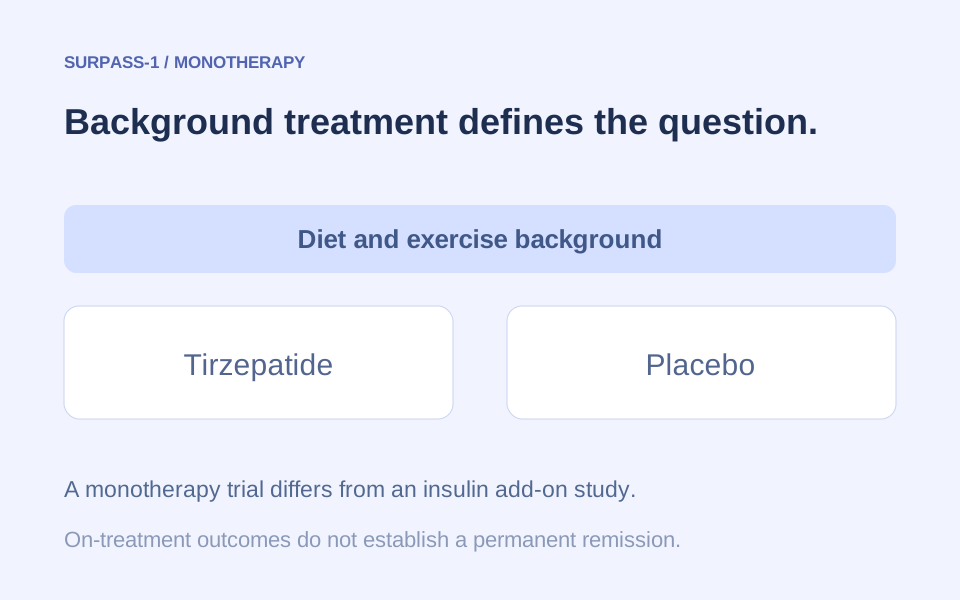
SURPASS-1 showed that tirzepatide lowered average HbA1c and body weight when used without another glucose-lowering medicine in adults with type 2 diabetes. It compared three weekly maintenance doses with placebo for 40 weeks. [1] Monotherapy means one glucose-lowering drug was being used. It does not mean that the drug cured the condition, removed the need for follow-up or outperformed every alternative first treatment.
This is a useful trial precisely because the question is relatively clean. Other diabetes medicines did not create the background combination being evaluated. The result helps explain tirzepatide's own treatment effect in this population. It remains an on-treatment experiment, with dietary and activity advice in the care setting, rather than an experiment proving that normal glucose persists after medication withdrawal.
The participants and comparator
The double-blind randomized phase 3 study assigned 478 adults whose type 2 diabetes was inadequately controlled with diet and exercise alone. Average HbA1c was about 7.9%, and average diabetes duration was 4.7 years. Participants received tirzepatide targeting 5, 10 or 15 mg weekly, or placebo. The main assessment was at week 40. Eli Lilly funded the trial. [1] These are treatment-group descriptions rather than instructions for choosing or escalating a dose.
Placebo answers whether the treatment adds benefit over the study's background care. It does not rank tirzepatide against metformin, an SGLT2 inhibitor or semaglutide. A person deciding between active treatments needs evidence that actually compares those options, plus a clinician's assessment of indication, risks and access. A placebo-controlled result should not be presented as a tournament win against drugs that were never assigned.
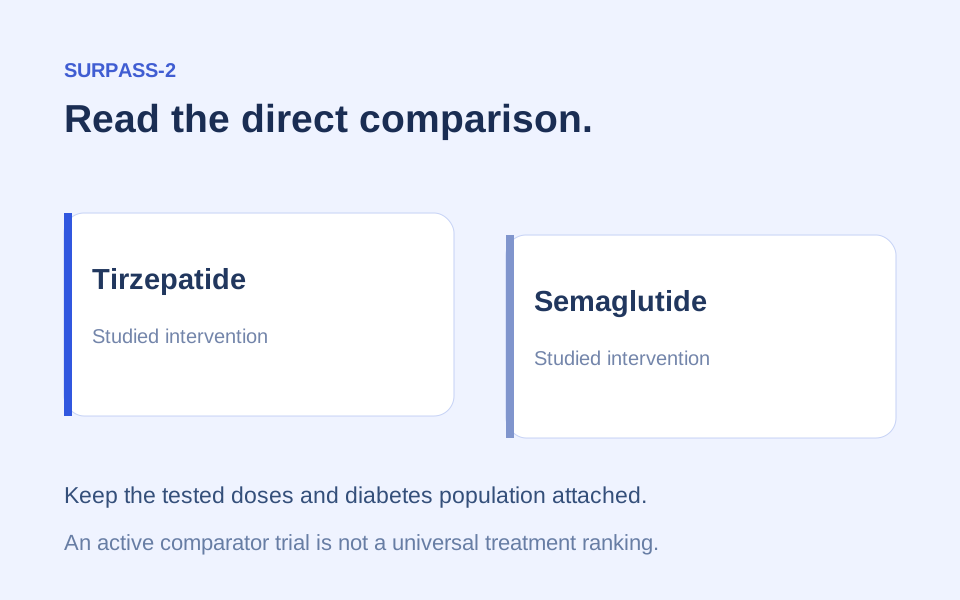
For a direct active-treatment comparison, read our SURPASS-2 active-comparator analysis.
The glucose result was large within this setting
Average HbA1c reductions were about 1.9 to 2.1 percentage points across the tirzepatide groups, compared with little average change on placebo. A substantial proportion reached an HbA1c below the usual diagnostic threshold for diabetes while receiving tirzepatide. [1] That is evidence of effective glucose lowering during treatment. It is not evidence that diabetes had disappeared independently of the medicine.
The distinction matters because the same laboratory number can describe different clinical states. A low HbA1c achieved while taking an effective drug is controlled diabetes. Demonstrating drug-free remission requires a different assessment, including what happens without glucose-lowering medication and over an appropriate interval. SURPASS-1 did not randomly withdraw successful treatment and establish sustained drug-free control. A headline that drops the words 'during treatment' changes the claim.
Weight change is a separate endpoint
Average weight reduction with tirzepatide ranged from about 7.0 to 9.5 kg across the maintenance-dose groups. [1] This accompanies the glucose finding but should not be confused with the main obesity treatment program. The participants had diabetes, and the experiment lasted 40 weeks. It does not supply a personal weight forecast for someone without diabetes, or establish that higher doses are the correct next step for an individual.
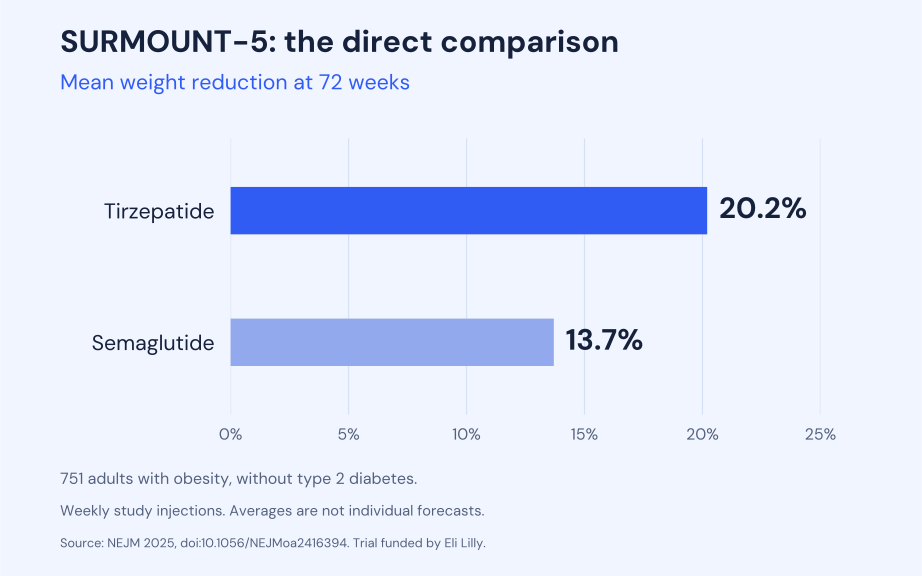
It is tempting to compare this kilogram range with percentages from a much longer obesity trial. The units, starting weights, duration and patient selection differ. A fair comparison would first align those details. Otherwise, the apparent ranking may partly reflect the way the numbers were selected rather than a demonstrated difference between medicines. Use each trial to answer its own question before assembling a broader picture.
The biomarker paper adds mechanism, not proof of regeneration
An exploratory post hoc analysis of SURPASS-1 examined fasting markers related to pancreatic beta-cell function and insulin sensitivity. Measures including HOMA2-B and proinsulin-related markers improved with tirzepatide. [2] These findings help investigate how the treatment may improve metabolic control without other glucose-lowering drugs in the background. They do not demonstrate that new pancreatic cells grew or that the underlying disease was permanently repaired.
A calculated marker is not a direct count of functioning cells, and measurements taken during treatment cannot establish durability after stopping it. The secondary analysis also was not a separate randomized replication: it used participants from the same trial. Counting the main paper and its biomarker analysis as two independent demonstrations of a cure would overstate both the quantity and the meaning of the evidence.
Low hypoglycemia in this trial has a context
The main report found no clinically significant glucose levels below 54 mg/dL or severe hypoglycemia with tirzepatide in this monotherapy setting. Gastrointestinal symptoms were among the common adverse events. [1] The reassuring hypoglycemia observation belongs to the population and medication background studied. It cannot be carried unchanged into treatment alongside insulin or an insulin secretagogue.
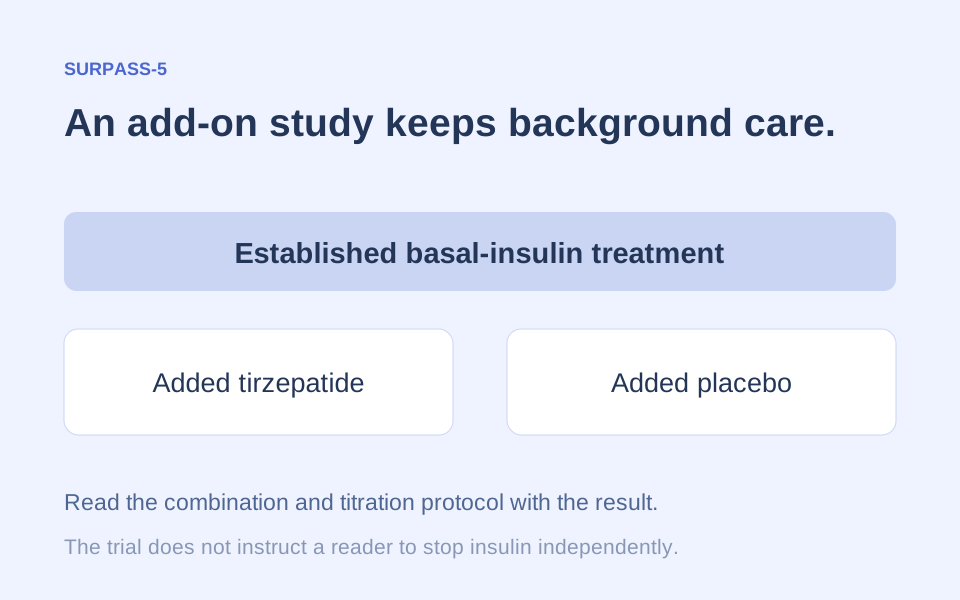
The Mounjaro prescribing information warns that hypoglycemia risk increases with certain accompanying therapies and includes other contraindications and precautions. [3] A person's complete medicine list therefore matters even when a trial is described as well tolerated. This article does not provide a dose schedule or a method for adjusting another medicine. Those decisions belong with the treating clinician, who can interpret symptoms and glucose measurements in context.
For coordinated diabetes support rather than a study result alone, see the 9amHealth diabetes-care review.
The label and the trial perform different jobs
Mounjaro's prescribing information identifies its authorized product use and explains safe prescribing. SURPASS-1 is one contributing clinical experiment. [3] The trial does not establish equivalence for a compounded preparation or an alternate route simply because it uses the word tirzepatide. Formulation and product identity remain relevant when a purchase is being considered.
Likewise, a trial average cannot establish that a particular clinic will provide the same follow-up or that insurance will cover treatment. Program access, medication coverage and the clinical decision to prescribe are separate steps. A transparent care plan should make each step understandable without using a favorable trial result as an implied guarantee that the prescription or outcome is already secured.
What the study can change in a consultation
SURPASS-1 supports a focused discussion about tirzepatide's ability to improve glycemia and weight in adults with type 2 diabetes who were not taking another glucose-lowering medicine. It leaves comparative first-treatment choices, long-term complications and drug-free durability to other evidence. The biomarker findings offer plausible explanations to investigate, rather than a reason to announce a cure.
The useful questions are concrete: how similar is the clinical situation to the study, what outcome is being pursued, and how will response and tolerability be reviewed? If HbA1c becomes normal during treatment, ask how that should be described and monitored. Accurate language protects a real success from being burdened with a promise the trial never tested.
Clarify what a care provider and dispensing pharmacy each supply with our clinic versus pharmacy access comparison.
Sources
Research describes groups and specific study conditions. Your medical history, symptoms and treatment decisions require advice from your own qualified clinician.