In this article
What to know
- Keep the study setting beside each percentage.
- A three-day episode median is not a reason to delay contact for persistent symptoms.
- Use the actual product’s Medication Guide and contact pathway.
A reported side effect still needs an individual assessment
Wegovy lists diarrhea among common adverse reactions. [1] Zepbound does as well. [3] That makes it a recognized treatment concern, but does not identify the cause of every episode or make persistent symptoms safe to ignore. The broader GLP-1 side-effects guide puts bowel symptoms beside other warnings; this article focuses on what diarrhea numbers and timing can actually tell you. The useful questions are how severe it is, whether it continues or returns, and what else has changed.
A symptom beginning after a prescription change is information to bring to the clinician, rather than proof of causation. Keep the exact product and route in view. “GLP-1” can refer to different medicines and preparations, and a clinic’s plan name may not identify the one you received.
Before interpreting the percentage
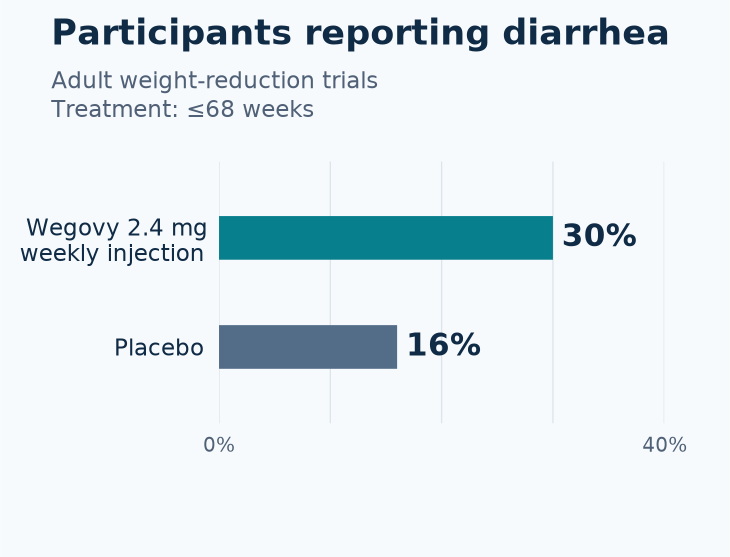
The June 2026 Wegovy label reports diarrhea in 30% of adults receiving the 2.4 mg weekly injection and 16% receiving placebo in pooled weight-reduction trials with up to 68 weeks of treatment and seven weeks of off-drug follow-up. The safety groups included 2,116 treated and 1,261 placebo participants, including people with and without type 2 diabetes. [1] These are reports across follow-up, rather than the percentage of days someone had loose stools.
The oral-versus-injectable guide explains why a shared ingredient does not remove formulation differences. The figure keeps one product and its placebo comparison together. It does not forecast your experience or assign the same percentages to Wegovy tablets, another injection regimen, Ozempic or a compounded preparation.
A three-day median is not a deadline for recovery
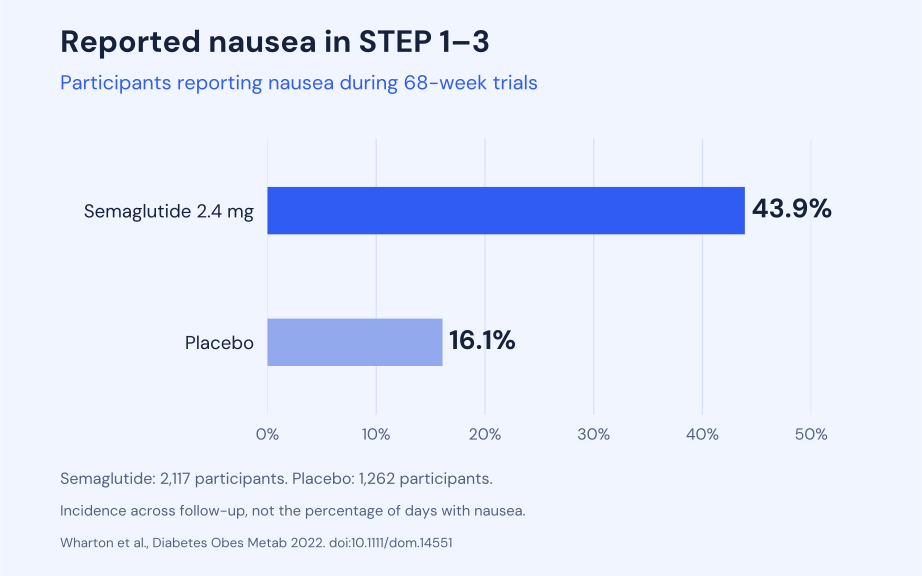
A post-hoc analysis of the Novo Nordisk-funded STEP 1–3 trials found a median duration of three days for individual diarrhea events with weekly semaglutide 2.4 mg. Diarrhea prevalence peaked around week 20 and declined afterward, although it remained higher than placebo throughout the trials. [2] The study describes trial events, not a rule that a patient should wait three days before calling.
A median is a midpoint in the estimated duration distribution; it is not a maximum, a recovery guarantee or a count of every day affected by repeated episodes. The analysis was exploratory and used monitored trials with regular follow-up. [2] A short first episode, recurring episodes and continuous diarrhea are different descriptions to give the clinical team. Record which pattern you are experiencing instead of treating them all as the same “average side effect.”
Tirzepatide has its own trial context
The November 2026 Zepbound label reports diarrhea, including frequent bowel movements, in 19%, 21% and 23% of participants assigned weekly injections of 5, 10 and 15 mg, respectively, versus 8% on placebo. Those figures come from two adult weight-reduction trials, with and without type 2 diabetes, with up to 72 weeks of treatment and four weeks of off-drug follow-up. The 5 mg arm came from the trial without diabetes; the higher-dose arms were included in both. The label says most nausea, vomiting or diarrhea events occurred during escalation and decreased over time. [3]
These are studied maintenance regimens, not dose-selection instructions. They should not be placed beside the Wegovy percentages to declare a safer drug: the trials differed. The semaglutide-versus-tirzepatide comparison explains what a direct comparison can address. Neither a population average nor an apparently smaller number settles which treatment is appropriate for an individual.
When to contact your prescriber
Both Medication Guides advise contacting the healthcare provider right away for diarrhea, nausea or vomiting that does not go away. They warn that fluid loss can lead to dehydration and kidney problems; severe or persistent stomach problems also need clinician contact. [1] [3] Those instructions take priority over an episode median or reassurance that symptoms often occur during escalation.
This article cannot determine the cause, prescribe a fluid target or choose an antidiarrheal. Ask the treating team what assessment and symptom plan fit your history, including any kidney condition and other medicines. Follow the urgent instructions supplied with the actual prescription; do not wait for a routine refill or treat app access as an emergency service.
Make the symptom report specific
Give the clinician the product name, preparation and route; when treatment or the prescription last changed; when diarrhea started; whether it stopped and returned; and accompanying pain, vomiting or difficulty maintaining intake. Include prescriptions, supplements and any over-the-counter remedy already taken. A concise timeline helps make the conversation concrete without selecting a treatment change yourself.
FDA explains that compounded medicines do not undergo its premarket safety, effectiveness or quality review. [4] Approved-product trial percentages cannot establish the risk of an unexamined compounded prescription. Confirm who prescribed it and which pharmacy dispensed it. The next decision should follow the symptoms and clinical assessment, rather than a comparison chart or a paid shipment.
Sources
- Wegovy label, June 2026 (opens in a new tab)
- Wharton et al. (2022): pooled STEP gastrointestinal tolerability analysis, DOI 10.1111/dom.14551 (opens in a new tab)
- Zepbound prescribing information and Medication Guide, revised November 2026: diarrhea reports, timing and dehydration warnings (opens in a new tab)
- FDA: understanding the risks of compounded drugs (opens in a new tab)
Research describes groups and specific study conditions. Your medical history, symptoms and treatment decisions require advice from your own qualified clinician.