In this article
What to know
- A common symptom can still need prompt assessment when severe or persistent.
- Trial percentages belong to the named product, regimen and population.
- The FDA’s November 2026 NAION communication is newer than several product labels.
The common effects and the serious warnings answer different questions
Nausea, vomiting, diarrhea, constipation and abdominal discomfort appear in weight-management labels. Their frequency depends on the actual medicine and study population. A common-side-effects list does not make a new symptom harmless, while serious warnings do not predict what every patient will experience. [1] [3]
This guide brings together Wegovy, Zepbound and Foundayo labels with current FDA communications. Our headache evidence guide separates one reported symptom from its possible causes. Use the exact product name when discussing symptoms; an ingredient or clinic plan name can leave important details unresolved.
Symptoms that should not wait for a routine message
Zepbound’s Medication Guide calls for medical help right away for serious allergic symptoms, including breathing difficulty or swelling of the face or throat. It also calls for immediate clinician contact for severe, persistent abdominal pain. Follow the instructions for your prescription rather than assuming severe symptoms are routine adjustment. [2]
The guide also flags upper abdominal pain, fever or jaundice as possible gallbladder symptoms needing prompt contact. The gallbladder evidence guide separates event rates from proposed mechanisms. An article cannot diagnose a reader’s pain. [2]
What a trial percentage actually counts
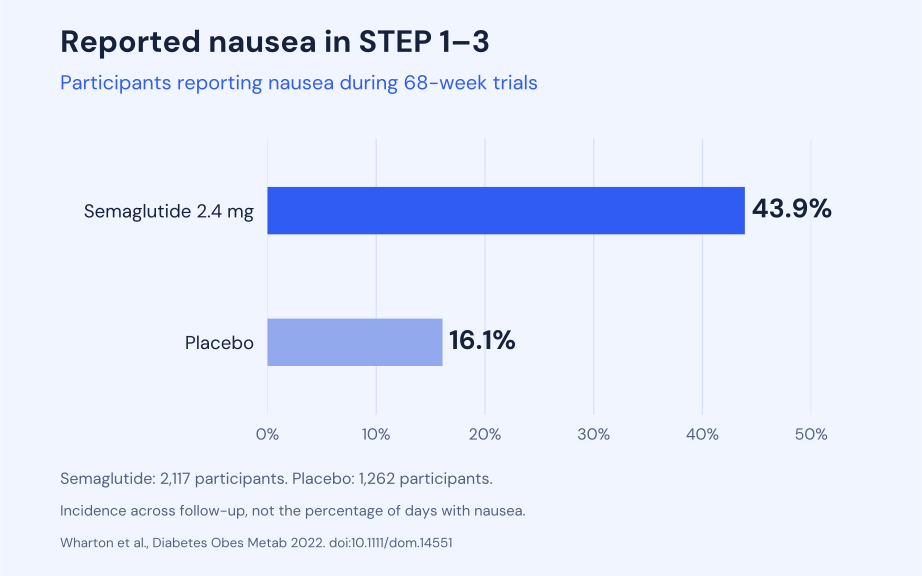
In the Wegovy label’s pooled adult weight-reduction trials, nausea was reported by 44% receiving the weekly 2.4 mg injection and 16% receiving placebo. Those figures concern 2,116 treated participants and 1,261 placebo participants treated for up to 68 weeks, with seven weeks of off-drug follow-up. They describe reports during a defined study, rather than the percentage of days each person felt sick. [1]
The semaglutide nausea evidence guide adds detail about timing and symptom reporting. Do not use one trial’s percentage to forecast a personal experience or rank unrelated clinics. Different trials can use different enrollment, follow-up and collection methods; selecting the smaller number from separate studies does not establish the safer medicine.
Diarrhea, constipation and dehydration need context
Foundayo lists diarrhea and constipation among common effects and warns that fluid loss with gastrointestinal symptoms can contribute to kidney problems. Persistent symptoms deserve clinician contact. Frequency alone cannot decide whether an episode needs examination. [3]
The diarrhea frequency and duration guide explains why an episode median is not a reason to wait when symptoms persist. The constipation evidence guide considers duration alongside frequency. Describe onset, persistence, associated pain and effects on eating or drinking. An online average cannot resolve those questions. This guide does not prescribe a fluid target, bowel remedy or treatment change.
A tablet is not an injection with the needle removed
The June 2026 Wegovy label separately discusses weekly injection regimens, daily tablets, adolescents and other clinical populations. Its tablet trial excluded people with type 2 diabetes. The label’s statement that common tablet reactions were similar to an injection table is not a separate set of identical tablet percentages. [1]
The oral and injectable formulations guide explains why route, finished product and study evidence stay together. Foundayo contains orforglipron; Wegovy contains semaglutide. A different tablet ingredient or administration routine should not inherit another product’s adverse-event figures. Compare the product being prescribed, without converting milligrams or constructing a dosing schedule from a chart. [1] [3]
Headache, tiredness and hair changes are not a diagnosis
Foundayo lists headache, fatigue and hair loss among common adverse reactions. Their presence in a label means they were observed, without identifying the cause of every similar symptom during treatment. [3]
The fatigue evidence guide discusses the surrounding symptom pattern, while the hair-loss trial guide separates reported groups. Include other medicines and recent changes when describing a symptom. Neither overall treatment benefit nor an isolated report establishes its cause.
Vision: the November 2026 FDA update matters
On November 9, 2026, FDA required labeling changes for GLP-1 receptor agonists because of a potential increased risk of non-arteritic anterior ischemic optic neuropathy, or NAION. This rare optic-nerve condition can involve sudden, painless loss of vision in one eye and permanent damage. FDA advises contacting a healthcare professional right away for such visual changes. A June or August label alone may predate this communication. [4] The November Zepbound prescribing information now includes a dedicated NAION warning. [7]
The SUSTAIN-6 retinopathy guide concerns a different eye endpoint in a diabetes population. Our dedicated NAION evidence guide explains the new optic-nerve warning, while this overview keeps it beside other safety concerns. Neither article can diagnose new visual symptoms or explain away NAION. FDA’s communication does not rank medicines for individual safety or supply a medication-change plan. [4]
Thyroid warnings should be described precisely
Zepbound’s boxed warning describes thyroid C-cell tumors in rats; human relevance is unknown. Contraindications include personal or family medullary thyroid carcinoma or MEN 2, rather than every thyroid condition. Discuss the actual warning and history with the prescriber. [2]
Foundayo also has a boxed warning, but its explanation differs: orforglipron was not pharmacologically active in rats or mice and did not produce tumors in them. Its human thyroid-tumor risk remains unknown, and its contraindications also include personal or family medullary thyroid carcinoma or MEN 2. Different labels should not become a claim that every medicine produced identical animal findings. [3]
Other medicines and procedures belong in the discussion
Zepbound identifies greater hypoglycemia risk with medicines such as insulin or a sulfonylurea. Its guide also asks patients to disclose treatment before anesthesia or deep sedation because of aspiration concerns. Share the medication list and planned procedures instead of applying an online stop-time rule. [2]
Pregnancy plans, contraception, breastfeeding and existing conditions also need product-specific review. Ask the clinician or pharmacist about the applicable instructions; this overview cannot replace an interaction check or individual prescribing assessment.
Mental-health information changed in 2026
FDA’s January 2026 review found no increased risk of suicidal ideation or behavior with GLP-1 receptor agonists and requested removal of that warning from Saxenda, Wegovy and Zepbound labeling. An older article describing that warning as the regulator’s current conclusion can therefore mislead. [5]
The mental-health evidence guide separates that regulatory finding from trial enrollment limits and individual symptoms. Reassurance about a drug-associated increase in risk does not make a person’s distress unimportant. FDA continues to advise discussing new or worsening depression, suicidal thoughts or unusual mood or behavior changes with a healthcare professional. [5]
Compounded preparations bring additional questions
FDA says compounded GLP-1 drugs have not undergone its review for safety, effectiveness and quality. It has received reports of measurement errors, some requiring hospitalization, with compounded injectable semaglutide. Those preparation and administration concerns are separate from the percentages in approved-product trials. [6]
A shared ingredient name does not establish equivalent outcomes. Ask which pharmacy dispenses the preparation and who explains its instructions. FDA recommends compounds only for needs an approved drug cannot meet. A comparison or calculator cannot create a dose conversion. [6]
Make follow-up usable before it is needed
Keep a concise record of the prescription, changes, symptoms and other medicines. Ask which concerns need immediate assessment, which can use routine messaging and where help is available outside normal hours. Continuous app access does not necessarily mean continuous clinical availability.
Sources
- Wegovy prescribing information and Medication Guide, revised June 2026 (opens in a new tab)
- Zepbound prescribing information and Medication Guide, revised November 2026 (opens in a new tab)
- Foundayo prescribing information and Medication Guide, revised July 2026 (opens in a new tab)
- FDA November 9, 2026 safety-labeling requirement for potential NAION risk (opens in a new tab)
- FDA January 13, 2026 psychiatric-safety review and warning-removal request (opens in a new tab)
- FDA concerns with unapproved GLP-1 drugs used for weight loss (opens in a new tab)
- Zepbound US prescribing information, revised November 2026: NAION warning (opens in a new tab)
Research describes groups and specific study conditions. Your medical history, symptoms and treatment decisions require advice from your own qualified clinician.