In this article
What to know
- The trial used a daily injectable regimen with lifestyle therapy.
- BMI endpoints should not become a universal kilogram target.
- Tolerability and the post-treatment phase are material findings.
Adolescent evidence deserves its own reading
Liraglutide improved BMI-related outcomes compared with placebo in adolescents with obesity who had responded poorly to lifestyle therapy alone. [1] The useful interpretation concerns that specific population and a daily injectable regimen. It is not permission to borrow adult expectations or use a commercial adult prescribing service for a child. In a growing person, the treatment discussion also needs to distinguish BMI measures from kilograms on a scale. A research result can support a conversation with an appropriate clinician, while leaving individual eligibility, development, tolerability and the surrounding family support to that clinical relationship.
Who received the study treatment
The randomized, masked trial assigned 125 participants to liraglutide and 126 to placebo, all aged twelve to younger than eighteen. The active regimen was daily subcutaneous liraglutide targeted to 3.0 mg alongside lifestyle therapy. Treatment lasted 56 weeks, followed by 26 weeks after discontinuation. [1] That follow-up phase is important because the study did not stop asking questions when the prescription phase ended. It also makes the trial different from a brief before-and-after testimonial. The treatment period and withdrawal period need to stay separate when a reader assesses what was maintained, what changed and how long the evidence actually extends.
BMI endpoints are not the same as a personal weight target
The estimated difference in the primary BMI standard-deviation score at week 56 was −0.22 in favor of liraglutide. Estimated proportions achieving at least a 5% BMI reduction were 43.3% versus 18.7%; at least a 10% reduction occurred in 26.1% versus 8.1%. [1] These different measures should not be collapsed into one promise about pounds lost. A standardized BMI measure and percentage BMI change answer related but distinct questions in a developing population. The threshold proportions also show that response was variable. The study supports an average treatment effect, not a requirement that every adolescent reproduce the same change.
For a separate adolescent study with another regimen, read STEP TEENS evidence.
The adverse events belong beside the benefit
Gastrointestinal adverse events occurred in 64.8% of liraglutide recipients versus 36.5% with placebo. Adverse events led to discontinuation in 10.4% versus none. [1] Those findings prevent the benefit from being described as a simple or effortless addition. They also show why the continuing clinical relationship matters, rather than treating treatment as a product ordered once. An appropriate discussion should make room for tolerability, eating, day-to-day functioning and the reasons to reassess. A young person’s difficulty with treatment should not be interpreted as inadequate commitment to reaching a study endpoint or as a reason to conceal symptoms. Serious adverse events occurred in three of 125 liraglutide participants and five of 126 placebo participants. One suicide occurred in the liraglutide group and was judged unlikely to be treatment-related; during follow-up, two suicide attempts, one in each group, were likewise judged unlikely to be related. [1] These events deserve reporting without inferring causation or turning this small trial into proof of the absence of a rare risk.
Stopping did not preserve the whole difference
During the twenty-six weeks after treatment ended, the former liraglutide group had a greater increase in the BMI standard-deviation score than placebo, with an estimated between-group difference of 0.15. [1] That is evidence about the observed withdrawal phase, not proof that every participant returned to the same starting point. It matters because a successful initial treatment period does not automatically answer the maintenance question. Before beginning a long-term plan, the clinician and family need a realistic discussion of follow-up, affordability and transitions. The end of a paid program or a supply shipment should not quietly become the end of the care relationship.
The FDA approval has a defined scope
FDA’s December 2020 supplemental approval described Saxenda for adolescents aged twelve and older with obesity defined by specific age- and sex-related BMI cutoffs and body weight above 60 kg. It described the medicine as an adjunct to diet and activity measures. [2] Those conditions belong to that regulatory action and should not be simplified to a statement that any teenager wanting to lose weight qualifies. Current prescribing decisions require the current product information and an individual assessment. A research explainer does not replace either. The approved product and a different compounded preparation also should not be presented as the same intervention.
A newer trial is a separate comparison
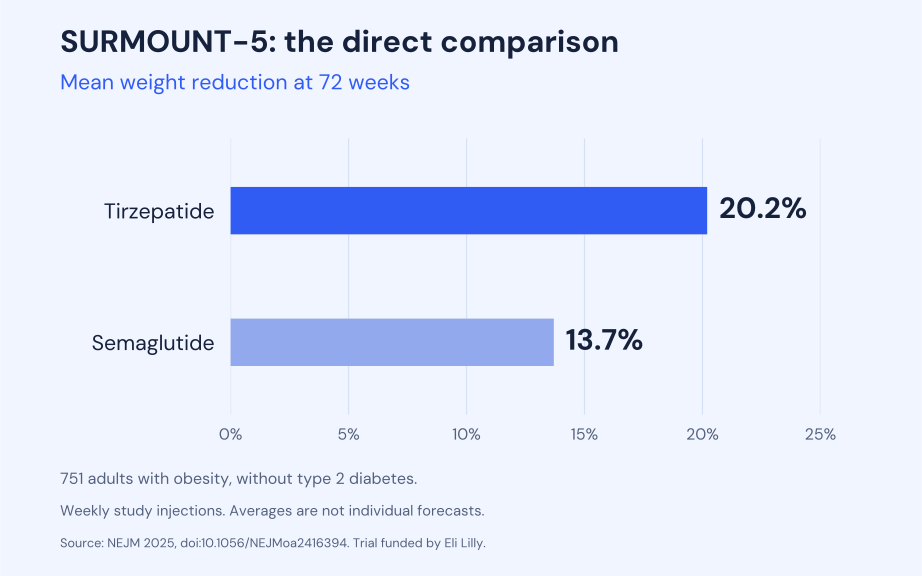
STEP TEENS studied weekly semaglutide in adolescents and provides evidence for a different regimen. [3] It was not a randomized liraglutide-versus-semaglutide trial. Putting the most favorable numbers from the two studies side by side cannot remove differences in enrollment, outcome definitions and treatment duration. If a clinician considers alternatives, the question should be how the evidence, product information and practical burden fit the individual adolescent. A daily versus weekly schedule may matter to a household, but convenience is not the only clinical consideration and an indirect average comparison cannot decide the entire treatment plan.
Use the evidence without turning care into a performance test
The trial helps establish that medication can change average BMI outcomes in a defined adolescent population, while showing that tolerability and continuing treatment deserve attention. It does not establish the right goal for a particular young person from a short description online. Families can use the evidence to ask more specific questions about the proposed medicine, follow-up and what happens if the plan is not working. Keep the conversation respectful and centered on health and function. Adult-oriented provider comparisons can explain billing models, but access for a minor needs a service and clinician explicitly equipped for adolescent care rather than an assumption that the adult route will apply. The young person should also understand what the proposed follow-up involves and how to raise a concern. A plan that allows honest feedback is more useful than one organized around a single target or an idealized success story.
For the distinct adult population, compare our explanation of liraglutide evidence in adults.
Sources
Research describes groups and specific study conditions. Your medical history, symptoms and treatment decisions require advice from your own qualified clinician.