In this article
What to know
- SUSTAIN 8 compared semaglutide 1.0 mg weekly with canagliflozin 300 mg daily in metformin-treated type 2 diabetes.
- Semaglutide had larger HbA1c and weight reductions at 52 weeks.
- That result does not establish superiority across cardiovascular, kidney or muscle-function outcomes.
A direct comparison with a narrow answer
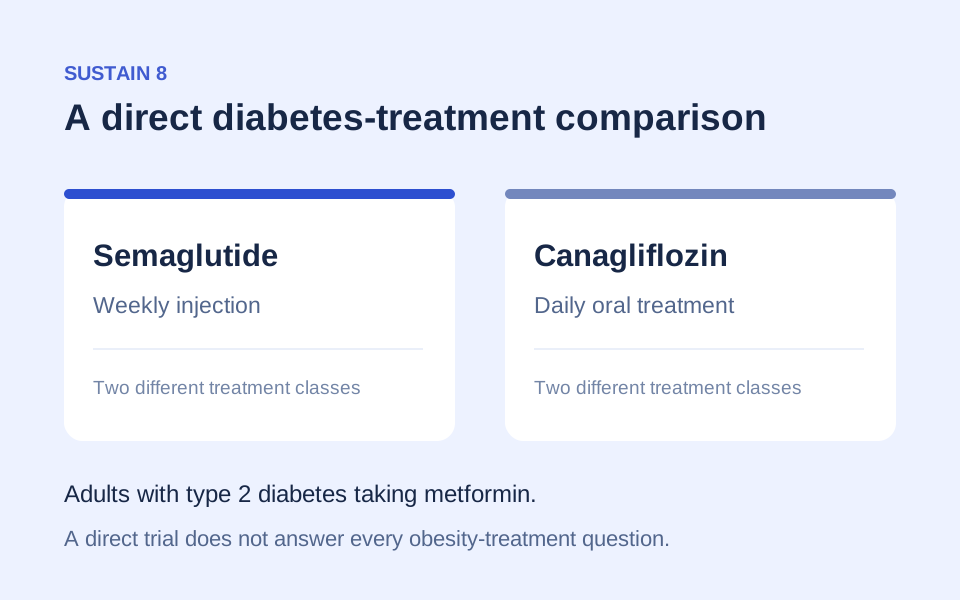
Semaglutide reduced HbA1c and body weight more than canagliflozin in SUSTAIN 8, a trial in adults with type 2 diabetes inadequately controlled on metformin. [1] The useful distinction is between winning those measured comparisons and being the best medicine for every person. The trial compared a particular weekly injectable GLP-1 regimen with a particular daily oral SGLT2 inhibitor regimen. It did not compare every product in either class or establish superiority for heart failure, kidney outcomes or long-term survival. A reader can take its results seriously while keeping those other treatment priorities open for a separate discussion with the prescriber.
The treatments, people and time were defined
SUSTAIN 8 randomized 788 adults to subcutaneous semaglutide 1.0 mg once weekly or oral canagliflozin 300 mg daily for 52 weeks. It used a double-blind, double-dummy design and was funded by Novo Nordisk. [1] Double dummy means participants received the active treatment for their assigned group alongside a placebo matching the other treatment’s format, helping preserve blinding despite one regimen being an injection and the other a tablet. That is a stronger basis for comparing the measured outcomes than placing averages from unrelated studies together. It also means the practical experience in the experiment was not simply taking one injection instead of one daily tablet.
The difference is not the total change
The estimated between-group difference favored semaglutide by 0.49 percentage points for HbA1c and 1.06 kg for body weight at week 52. The respective 95% confidence intervals were 0.33 to 0.65 percentage points and 0.36 to 1.76 kg in semaglutide’s favor. [1] Those are differences between groups, not the total reduction someone should expect from either treatment. An additional kilogram on average can matter to a treatment discussion without establishing that one medicine transforms every patient’s experience. The units also matter: a percentage-point HbA1c difference and a kilogram weight difference cannot be combined into one general percentage of superiority.
Which observations entered the main analysis?
The primary analysis used on-treatment observations collected before rescue medication was started. [1] That asks a clinically useful question about the treatments while used under those conditions, but it is not identical to asking what happened after every possible treatment interruption or additional medicine. When someone has difficulty continuing a regimen, that distinction becomes practical rather than statistical decoration. Ask whether a results figure includes later outcomes after people stopped or required another treatment. Neither approach is automatically wrong; the important thing is to know which question the reported estimate answers before transferring it into a personal expectation or a service advertisement.
A body-composition substudy adds a different question
A planned substudy enrolled 178 participants for DXA body scans. Its confirmatory analysis included 114 participants with eligible on-treatment follow-up scans before rescue medication, and the between-treatment body-composition changes were not statistically significant. [2] That does not contradict a weight difference in the larger trial. The scan comparison used a smaller group and measured different outcomes. It also does not establish that the two treatments are equivalent for fat or lean tissue. An uncertain comparison can leave meaningful possibilities open. The useful conclusion is to resist turning the main scale result into a confident claim about which treatment better preserves muscle.
For the distinction between scan measurements and function, read our lean-mass evidence guide.
Lean tissue and physical function are separate
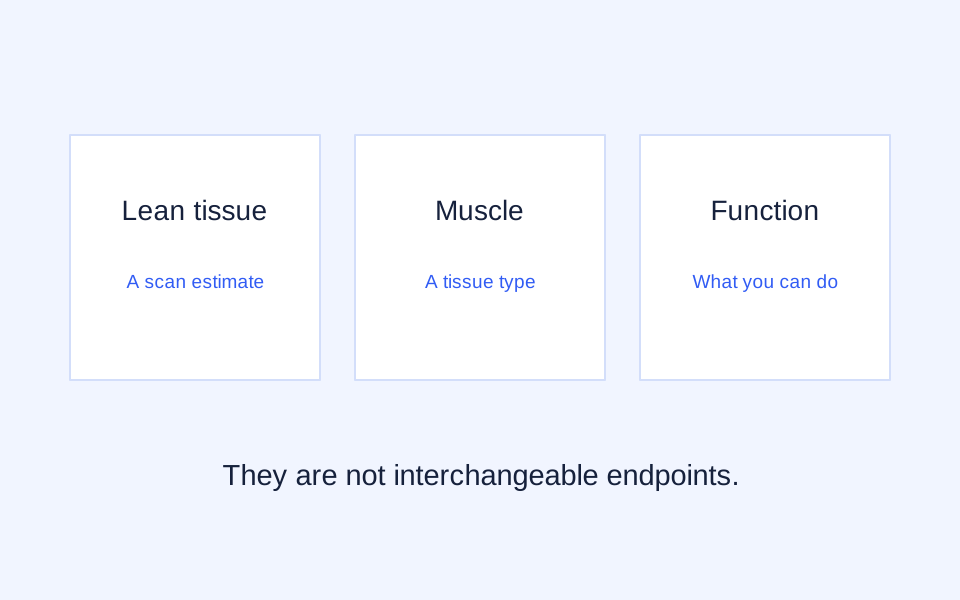
DXA estimates of lean tissue do not directly measure a person’s strength or ability to climb stairs, lift shopping or recover from an illness. The substudy reports body-composition measurements rather than establishing those functional outcomes. [2] A larger proportion of body weight classified as lean can also coexist with a reduction in the absolute amount of lean tissue. Keep the measure and its denominator visible when reading a graphic. For a personal care plan, the discussion should include the concern that matters to the person, rather than assume the percentage shown by a body scan fully answers it. A convincing weight comparison does not automatically settle every question about the quality of weight change.
Tolerability can change the practical choice
Adverse events led to premature treatment discontinuation in about 10% of semaglutide recipients and 5% of canagliflozin recipients. Gastrointestinal disorders were the most frequently reported adverse-event category with semaglutide. [1] Those findings belong beside the efficacy result. A medicine that produces a larger average reduction may still be difficult for an individual to continue, while a different medicine can raise its own safety and suitability questions. The trial does not remove the need to review the person’s history, other medicines and preferences. It supplies a comparison to discuss, rather than a reason to tolerate an unresolved problem because one group’s mean looked better.
Current product labeling has a separate role
The current U.S. Ozempic injection label, revised May 2026, lists diabetes glucose control and specified cardiovascular and kidney-risk indications. It also includes the thyroid C-cell tumor boxed warning and contraindications involving medullary thyroid carcinoma or MEN 2. [3] Those are product-specific prescribing boundaries. SUSTAIN 8 is not the source for every later outcome indication, and a weight change in this diabetes trial is not a chronic-weight-management indication. A compounded preparation or another oral or injectable semaglutide product needs its own identity kept clear. Familiarity with the molecule should not erase the finished product, formulation and clinical purpose being proposed.
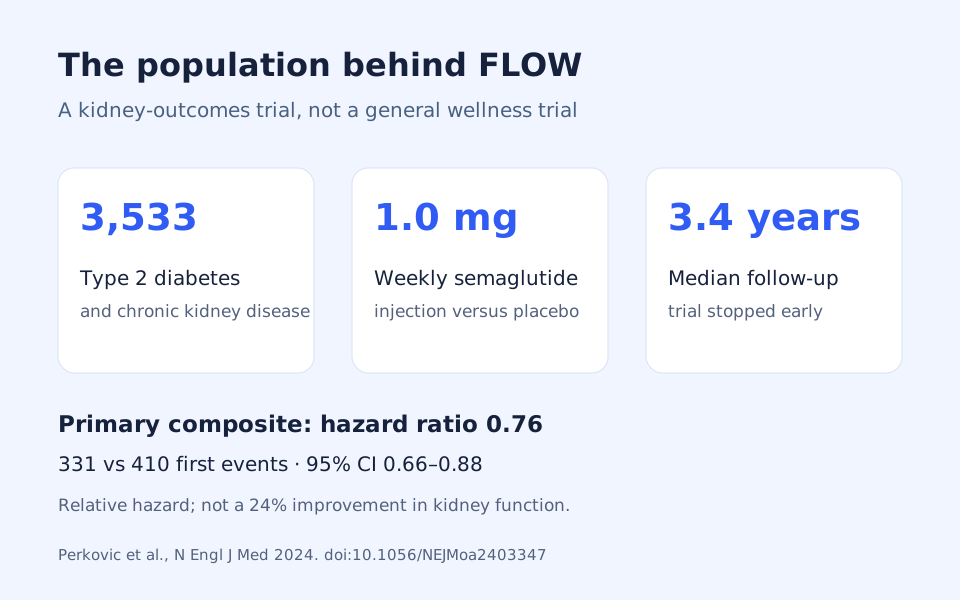
For a separate kidney-outcome trial, see our FLOW kidney-outcomes analysis.
Why a clinic comparison should not choose the molecule
A service can help with follow-up, insurance paperwork or coordinating diabetes care without determining the best medication through its subscription price. The relevant question is whether its clinicians can assess the priorities that matter for the patient and explain the actual prescription. SUSTAIN 8 cannot rank response times, pharmacy access or the value of a membership. Its direct comparison is useful precisely because the scientific question was controlled and specific. A commercial comparison should be equally explicit about its different question: what care is supplied, what the complete recurring bill is and who takes responsibility when the plan needs reconsidering.
For the difference between study evidence and an integrated care service, compare our 9amHealth review.
Bring the endpoint into the conversation
The strongest way to use SUSTAIN 8 is to ask how its glucose and weight findings fit the reason a change is being considered. If the concern is kidney disease, heart failure, tolerability or affordability, ask what separate evidence or practical constraint informs that part of the decision. A favorable average for one endpoint should not be allowed to answer all of them by association. There is no need to turn the trial into a self-directed switch. Take the exact comparison into a consultation, keep the product and patient population attached to it, and let the broader clinical discussion decide how much weight that result deserves.
Sources
Research describes groups and specific study conditions. Your medical history, symptoms and treatment decisions require advice from your own qualified clinician.