In this article
What to know
- STEP 8 directly compared specific injectable regimens in adults without diabetes.
- The average weight difference was 9.4 percentage points at 68 weeks.
- An efficacy comparison does not rank prescribing services or other formulations.
The useful distinction is a direct comparison
Semaglutide produced more average weight loss than liraglutide in STEP 8, a randomized comparison in adults without diabetes. The important advantage of this evidence is its design: the medicines were compared within the same trial rather than ranked using separate studies. That makes it a useful reference when the actual choice concerns those injectable regimens. It still does not settle every treatment decision. A clinician must consider suitability, tolerability and continuity, and a patient has to know which product a service is actually proposing. The trial result belongs to the treatment studied, not to every commercial offer using the same molecule name.
What the trial put side by side
STEP 8 randomized 338 adults with overweight or obesity without diabetes. It compared weekly injectable semaglutide 2.4 mg with daily injectable liraglutide 3.0 mg, alongside diet and activity counseling, over 68 weeks. The active-drug comparison was open label, while each active treatment had a matching placebo arrangement. [1] These are study descriptions, not instructions for starting or changing treatment. The population also matters: this was not a head-to-head diabetes-treatment trial or a study in children. A person whose clinical situation differs should ask how much the comparison helps their particular decision, rather than assume the study's inclusion criteria are incidental details.
Read the difference in percentage points
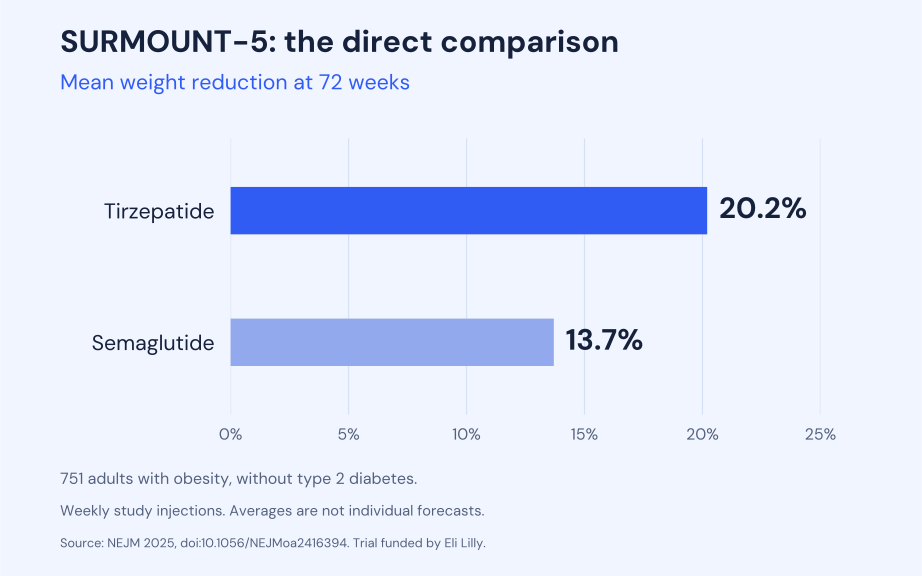
Mean weight change was −15.8% with semaglutide and −6.4% with liraglutide, an estimated difference of −9.4 percentage points, with a 95% confidence interval from −12.0 to −6.8. Gastrointestinal adverse events were reported in 84.1% and 82.7%, respectively. [1] The percentage-point distinction prevents a common misunderstanding. The difference describes shares of starting body weight, not a promise that every individual will lose a fixed extra amount. For a personal decision, an average is a starting estimate of group performance. It cannot identify which person will respond strongly, struggle with adverse effects or need a different clinical approach.
For the placebo-controlled background, see our liraglutide SCALE evidence.
Liraglutide's smaller result does not mean no benefit
The separate SCALE Obesity and Prediabetes trial randomized 3,731 adults without type 2 diabetes to liraglutide or placebo, with lifestyle counseling. At 56 weeks, average weight loss was 8.4 kg versus 2.8 kg. [2] That establishes a different point: liraglutide had efficacy against placebo in that study. It does not replace the STEP 8 head-to-head estimate, because the follow-up and trial population differ. A treatment can be less effective on average than another option while still helping some patients. That distinction is useful when access, a prior response or other clinical considerations make the choice more complicated than selecting the largest trial average.
Different trial populations should keep their own labels
SCALE Diabetes studied adults with type 2 diabetes and compared liraglutide regimens with placebo over 56 weeks. The 3.0-mg group had a mean 6.0% reduction in weight, compared with 2.0% with placebo. [3] Its result should not be substituted into STEP 8 as though it came from the same comparison. Diabetes status, other medicines and study design can all change what a number represents. When a table mixes these studies, the labels should make the differences visible. Otherwise, the apparent ranking can tell a cleaner story than the evidence supports and leave the reader unsure which finding actually applies.
What open label changes and what it does not
Knowing the assigned medicine can influence expectations, behavior and decisions about continuing treatment. That is one reason to retain the open-label description alongside the result. It does not erase randomization or make a direct comparison useless. A balanced reading keeps both ideas in view: STEP 8 is stronger for this particular comparison than putting two unrelated placebo-controlled trials together, while its design still has limits. The reader does not need to choose between treating a trial as perfect and dismissing it entirely. The better question is what uncertainty remains after the study has answered its main question.
The prescribing service is a separate purchase
A clinic may offer a familiar molecule through a different formulation, product or care arrangement. The evidence for a studied injectable regimen should not be silently transferred to an oral preparation, a compounded product or a promotional approach with different intended exposure. Price also concerns something the trial did not compare: membership fees, dispensing, follow-up access and insurance support. A useful consultation names the exact proposed product before discussing expected benefit. A useful quote then names the full continuing bill. Keeping those two conversations connected prevents a strong efficacy result from becoming an endorsement of a particular seller whose service was never tested in the trial.
For one branded-access service model, read our Ro Body review.
Use the result to improve the next conversation
STEP 8 supports a clear average efficacy difference within its studied setting. It gives a reader a better question for the prescriber: how does that direct comparison apply to the products and health circumstances under discussion? Follow that with the practical issues that can interrupt otherwise appropriate care, including a plan for adverse effects, refill questions and changes in coverage. Avoid treating the trial's regimen as a self-directed switching plan. The useful outcome of reading it is a more precise conversation, not a new instruction to follow without assessment. A treatment choice can acknowledge the average difference while still giving individual tolerability and access their proper weight.
Compare the same treatment before comparing prices
For a shortlist, write the product and formulation beside the provider name, then separate the medicine charge from membership or support fees. A quoted saving is difficult to interpret when one service assumes insurance coverage and another assumes cash payment. The same applies when one offer describes a branded medicine and another a compounded preparation. Resolve those differences before using STEP 8 to compare likely benefit. That small piece of organization makes the research more useful: it connects a well-defined scientific comparison to an equally clear purchasing decision, while leaving the clinical choice with the treating professional.
To separate access support from a care-team model, use our Ro versus Form Health comparison.
Sources
Research describes groups and specific study conditions. Your medical history, symptoms and treatment decisions require advice from your own qualified clinician.