In this article
What to know
- AWARD-11 studied metformin-treated adults with type 2 diabetes who were GLP-1 naive.
- The 4.5 mg target dose improved glucose control versus 1.5 mg; analysis choices matter.
- Secondary weight findings do not establish a chronic weight-management indication.
A dose comparison with a specific job
AWARD-11 found that higher weekly dulaglutide doses could improve glucose control and weight outcomes compared with 1.5 mg in adults with type 2 diabetes taking metformin. [1] The important distinction is what kind of decision the experiment tested. This was a diabetes dose comparison within one medicine. It was not a contest against an obesity medicine, and it did not show that the largest dose is the right destination for everyone. For a reader already using a GLP-1 medicine, the useful question is whether the treatment goal and study population resemble their own situation.
Who started, and what they started with
The trial randomized 1,842 adults to dulaglutide target doses of 1.5, 3.0 or 4.5 mg weekly. Participants were using metformin, had inadequately controlled type 2 diabetes, and were not previously using a GLP-1 receptor agonist or insulin. The main efficacy comparison was at 36 weeks, with treatment continuing through 52 weeks. [1] [2] This matters because the trial did not take people who had spent years on 1.5 mg, developed a plateau and then randomly assign them to stay or increase. Its findings inform a dose strategy, but that particular established-user scenario would need its own evidence.
Glucose lowering depends on which analysis you read
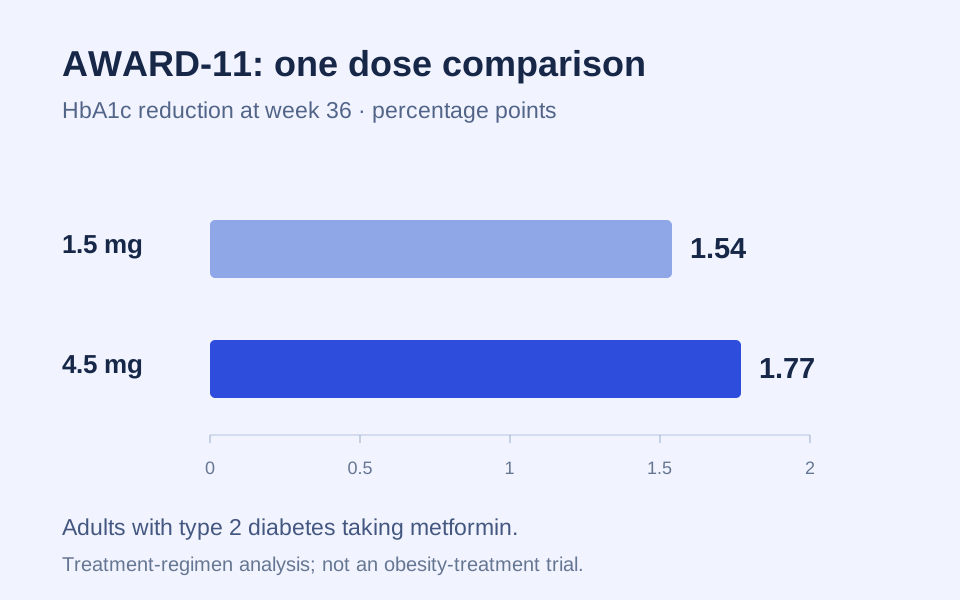
For the analysis that included outcomes regardless of treatment discontinuation or rescue medication, HbA1c fell by 1.77 percentage points with 4.5 mg and 1.54 points with 1.5 mg at week 36. The estimated difference was 0.24 percentage points in favor of 4.5 mg. The 3.0 mg comparison did not meet superiority in that analysis, although it did in the on-treatment analysis excluding rescue medication. [1] A headline that treats both higher doses as identical misses this distinction. The answer depends partly on whether the question concerns an assigned treatment strategy or outcomes while remaining on the study treatment without rescue.
Weight change was additional, not an obesity indication
The exploratory weight report describes on-treatment estimated mean reductions of 3.1 kg, 4.0 kg and 4.7 kg for the 1.5, 3.0 and 4.5 mg groups at week 36. The highest-versus-lowest target-dose difference was therefore about 1.6 kg in that analysis. [2] These are kilograms, not percentages of starting body weight. They also come from a diabetes population receiving a specific regimen. A secondary weight result does not mean dulaglutide has the same evidence or labeled purpose as every medicine advertised for obesity. Keep the treatment objective visible before turning a dose chart into a shopping comparison.
For another example of why diabetes populations need their own interpretation, read our STEP 2 diabetes-population explainer.
Three papers do not mean three independent trials
The principal efficacy report, exploratory weight analysis and gastrointestinal tolerability analysis all draw on AWARD-11. [1] [2] [3] They add different views of the same randomized experiment; they are not three separate replications. That distinction matters when a collection of citations makes an argument look larger than it is. The weight analysis also considered subgroups and additional thresholds, which can help describe patterns without creating a new trial for every subgroup. I would place the main randomized comparison first, then use the secondary papers to understand its boundaries. Repeating a result in another figure does not make it a different patient population.
Tolerability is about timing as well as totals
The post hoc gastrointestinal analysis found the highest proportions of new nausea, vomiting or diarrhea early after treatment initiation, with new-event rates generally declining thereafter. Participants started at 0.75 mg before scheduled escalation toward their assigned dose. [3] The implication is not that a higher dose cannot cause problems. It is that a tolerability estimate belongs to the whole escalation schedule, including its starting dose and time to adapt. A reader should avoid transferring the study experience to a self-directed jump between doses. The practical service question is who assesses symptoms and decides whether the next planned increase still makes sense.
A group pattern cannot explain an individual symptom
The tolerability report is a post hoc analysis, meaning the investigators examined these detailed patterns after the main trial design had been established. [3] It is useful for understanding when events appeared, but it cannot diagnose the reason someone feels unwell. Nor can a falling average event rate promise that a particular symptom will disappear if a person persists. The reasonable takeaway is to discuss the actual course of symptoms with the prescriber rather than use a published average as a reason to override personal difficulty. More efficacy at the group level and acceptable tolerability for an individual remain separate judgments.
What the current label adds
The current U.S. Trulicity label describes diabetes glucose control and cardiovascular-risk reduction in specified adults with type 2 diabetes; it does not list chronic weight management as an indication. It includes a boxed warning about thyroid C-cell tumors, contraindications involving medullary thyroid carcinoma and MEN 2, and warnings including pancreatitis, hypoglycemia with certain other medicines and severe gastrointestinal reactions. [4] Those boundaries are part of the product decision, not details a clinic subscription replaces. A higher available strength is an option within prescribing, rather than permission to select a dose from the size of the weight-loss result.
For the separate cardiovascular question, see our REWIND cardiovascular evidence.
Bring a treatment goal into the comparison
AWARD-11 is most helpful when the conversation begins with the reason for considering a change: glucose control, tolerability, affordability or another clinical priority. The study was funded by Eli Lilly. [1] Its results cannot settle which telehealth service communicates best, what an insurance plan covers or whether another medication would be preferable for an individual. A useful clinic comparison should therefore identify the actual medicine and its indication, then explain follow-up and the complete continuing cost. Ask how success will be judged and when the plan will be reconsidered. That produces a clearer decision than assuming every higher number on a pen is a better outcome.
For the care relationship and payment comparison, read our Form Health review.
Sources
- AWARD-11 randomized dulaglutide dose-comparison trial (opens in a new tab)
- AWARD-11 exploratory weight-outcome analysis (opens in a new tab)
- AWARD-11 post hoc gastrointestinal tolerability analysis (opens in a new tab)
- Current U.S. Trulicity prescribing information, revised March 2026 (opens in a new tab)
Research describes groups and specific study conditions. Your medical history, symptoms and treatment decisions require advice from your own qualified clinician.