In this article
What to know
- Use food examples to build your own list, not a fixed menu.
- A label serving is not a recommendation of how much to eat.
- Plan the shopping and preparation as well as the food.
Download the blank food planner (PDF)
A one-page sheet for your own food, shopping, preparation and care-team questions.
Start with the meal you need to make
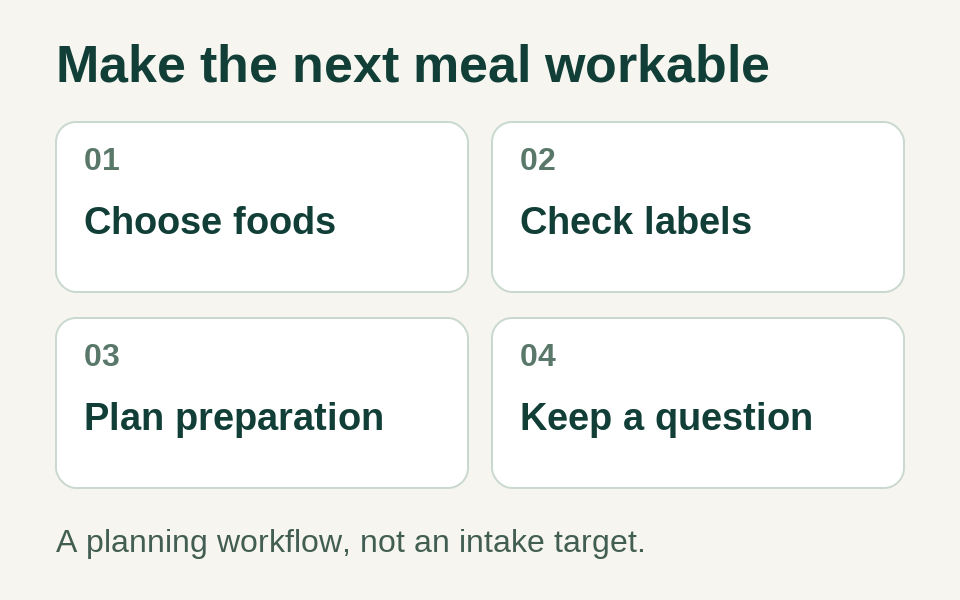
Choose one upcoming meal or snack rather than trying to solve a whole week at once. Keep the food and fluid instructions you already have from your care team beside the plan. Write down what is getting in the way: shopping, preparation, preferences, appetite or symptoms. The useful starting point is a meal you can realistically obtain and prepare, not a strict menu copied from a different person.
The Obesity Society identifies nutritional assessment, personalized nutrient-dense eating and management of gastrointestinal symptoms as priorities alongside GLP-1 obesity treatment. [1] Use the blank food planner to separate what you already have, what needs buying or preparing and the question you want answered. It is a planning aid, not a personal calorie, fluid or protein prescription.
Build a short list of food options
NIDDK’s May 2023 adult guidance lists fruits, vegetables, whole grains, protein foods and dairy or fortified soy alternatives among its examples. [2] These are general adult-food examples, not a medication-specific menu. Start with options you already use and ask how they fit your existing care instructions.
Pick foods you enjoy and can access, then consider what you need to buy or prepare to put them together. A food that takes more money, equipment or time than you have is not a workable default. Use the questions in the table to make those constraints visible instead of turning the examples into compulsory portions.
| Options to consider | Examples in NIDDK guidance | Planning question |
|---|---|---|
| Fruit and vegetables | Whole fruit and a variety of vegetables. [2] | Which options do I enjoy and already have? |
| Whole grains | Oats, brown rice or whole-wheat bread. [2] | What would be convenient to prepare? |
| Protein foods | Beans, lentils, eggs, fish or poultry. [2] | Which option fits my preferences and existing instructions? |
| Dairy or alternative | Low-fat milk or yogurt, or fortified soy beverages. [2] | What can I use comfortably and affordably? |
Check the label before adding protein grams
FDA explains that serving sizes reflect what people typically consume, not how much they should eat. A package may contain multiple servings, and some labels show both per-serving and whole-package columns. [3] Keep the serving size beside the nutrient amount you are reading so the two quantities use the same basis.
Use the meal protein calculator to add the labelled grams in the portions you choose. Enter protein grams rather than the total weight of the food; the calculator does not set an intake target or assess the whole meal. The lean-mass evidence guide separates body-composition measurements from everyday function; a meal total cannot assess either one. The Obesity Society also identifies adequate protein and strength training as priorities. [1]
Make a food question specific
If nausea or bowel changes make usual eating or drinking difficult, describe that difficulty to the prescribing team rather than trying to fix it by creating more food rules. The nausea evidence guide puts reported symptoms beside product-specific follow-up questions. Note what changed, when it happened and what you can still manage; ask what should prompt earlier contact. A food list cannot assess the cause of a symptom.
For a “foods to avoid” question, take the actual food or situation to the conversation: what was eaten, the portion, the timing and any symptoms. Ask which change fits your own plan and how you will review it. This worksheet does not establish that a particular food is prohibited by your prescription or tell you to change medicine.
Plan the practical steps, then keep the answer
On the blank worksheet, name the meal you want to plan and list foods already available. Next, note what needs buying or preparing. Keep one question beside those choices rather than filling an uncertain answer from a generic diet chart. You can complete another sheet when the next meal poses a different practical problem.
Use the visit journal when you want to keep a question beside dated observations for an appointment. Download or print the notes you want to bring; it does not send them to a clinician. The food planner handles shopping and preparation, while the journal keeps your own visit notes. Both remain separate from deciding what nutrition or treatment is appropriate for you.
Sources
Research describes groups and specific study conditions. Your medical history, symptoms and treatment decisions require advice from your own qualified clinician.