In this article
What to know
- Match the whole description before comparing instructions.
- Ask which finished preparation the offer names.
- Keep unresolved wording as a question for the care team.
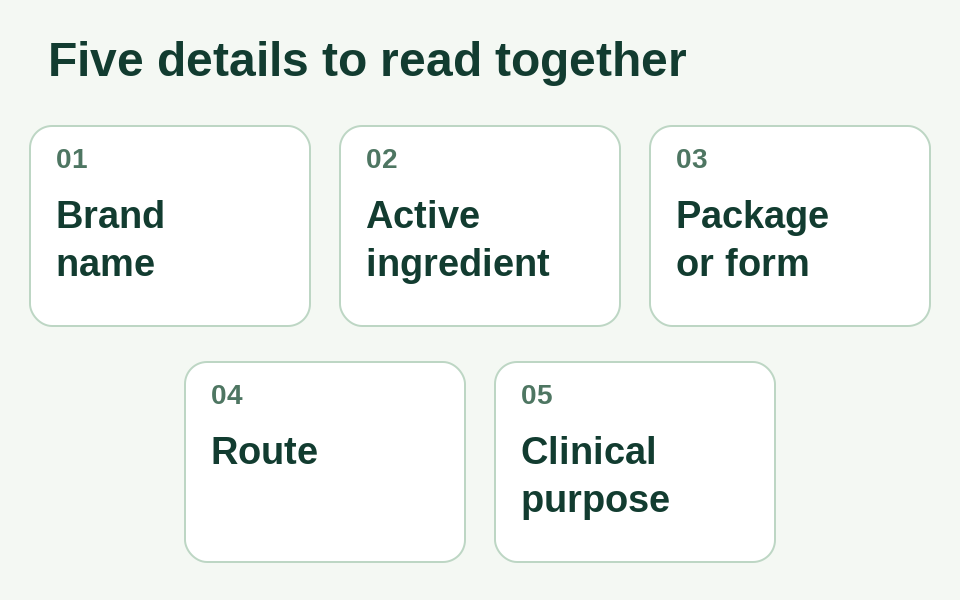
Write down five separate details
Start with five fields: brand name, active ingredient, package or formulation, route and the purpose discussed with your clinician. Copy them from the actual prescription and dispensing label rather than filling a blank from an advertisement. Use the metformin and semaglutide comparison to organise a discussion about the specific treatment goal. Keep the proposed product beside that question. For a patch or “booster” advertisement, make a separate product-evidence check before treating it as a medicine comparison. If a field is unclear, mark it as a question. A clinic’s programme name is not a substitute for identifying the medicine.
The examples below use the June 2026 Wegovy, May 2026 Ozempic and November 2026 Mounjaro and Zepbound labels. [1] [2] [3] [4] They select one adult use per brand, not every indication or eligible age group. Labelled presentations do not establish stock, coverage or suitability for an individual.
Read the row as a whole
The four brand examples come from FDA-approved product labels. [1] [2] [3] [4] This is not a ranking or a recommendation to switch. Read the use alongside its stated lifestyle measures and population; keep the prescriber’s reason for your own prescription separate from the name of a programme.
| Brand and ingredient | Form and route | One selected adult label use |
|---|---|---|
| Wegovy — semaglutide | Tablet by mouth or injection under the skin. | Weight reduction and long-term maintenance in adults with obesity, or overweight with a weight-related condition; with a reduced-calorie diet and increased physical activity. [1] |
| Ozempic — semaglutide | Injection under the skin. | Improve blood sugar control in adults with type 2 diabetes, alongside diet and exercise. [2] |
| Mounjaro — tirzepatide | Injection under the skin. | Improve blood sugar control in adults with type 2 diabetes, alongside diet and exercise. [3] |
| Zepbound — tirzepatide | Injection under the skin. | Weight reduction and long-term maintenance in adults with obesity, or overweight with a weight-related condition; with a reduced-calorie diet and increased physical activity. [4] |
Ask what is actually being supplied
An ingredient name alone leaves the finished preparation unidentified. Ask for the full product name and whether the offer is for an approved product or a compounded preparation. Before comparing an offer, use the compounded-medicine decision guide to organise the pharmacy and purchase questions. FDA says compounded drugs are not FDA-approved and do not undergo its premarket review for safety, effectiveness or quality. It recommends them only when an approved drug cannot meet a patient’s medical needs. [5]
If an offer uses “generic,” ask which specific approved product that wording refers to. FDA identifies semaglutide sodium and semaglutide acetate as different active ingredients from those in approved drugs; it lacks information on whether those salts share the same chemical and pharmacologic properties. [5] Do not resolve an unclear ingredient by guessing from a familiar brand name.
Keep the package beside the instructions
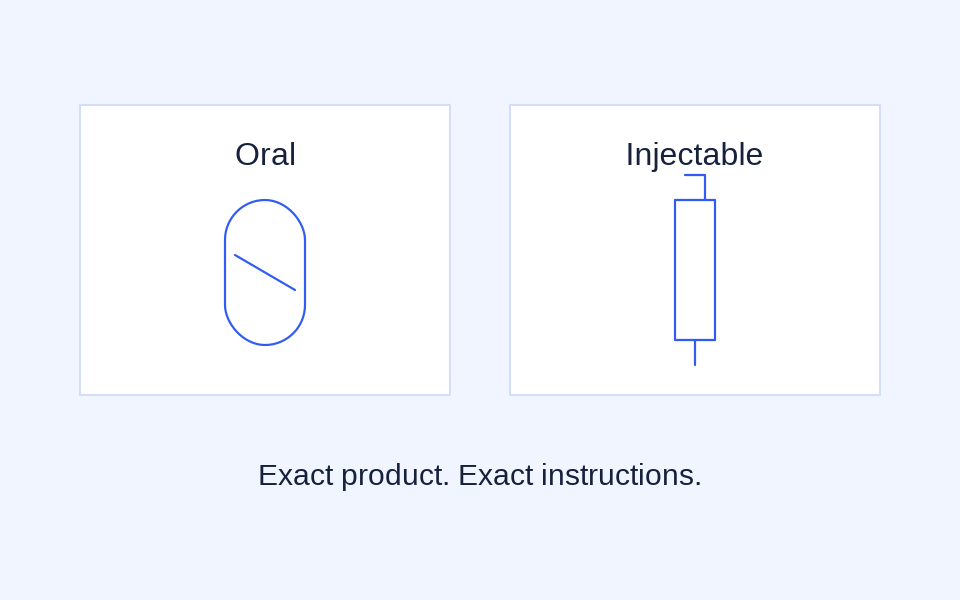
After identifying the product, separate how it is taken from how it is stored. The oral versus injectable guide frames questions about administration routines; it does not provide a switching schedule. For a vial, use the label-reading guide to organise measurement questions for the dispenser. Ask the prescriber which written instructions apply before changing a routine.
Use the storage and travel guide to organise questions about the actual container and its history. Record the presentation and any uncertainty before packing or accepting a delivery. A comparison table should not replace the dispenser’s answer about your package.
Leave with the missing details resolved
Bring the five fields and any unresolved wording to the prescriber or pharmacist. The visit journal can keep those questions beside your notes; download or print them before leaving the page. It does not decide which prescription is appropriate.
Ask for a written clarification when the offer, prescription and delivered label seem inconsistent. Keep the documents together so the care team can address the specific discrepancy. This reference supplies a reading framework, not dosing, conversion or reconstitution instructions.
Sources
- Wegovy label, June 2026: identity and selected adult use (opens in a new tab)
- Ozempic FDA label, May 2026: identity and adult diabetes use (opens in a new tab)
- Mounjaro label, November 2026: identity and adult diabetes use (opens in a new tab)
- Zepbound label, November 2026: identity and selected adult use (opens in a new tab)
- FDA concerns: compounded preparations and semaglutide salts (opens in a new tab)
Research describes groups and specific study conditions. Your medical history, symptoms and treatment decisions require advice from your own qualified clinician.